
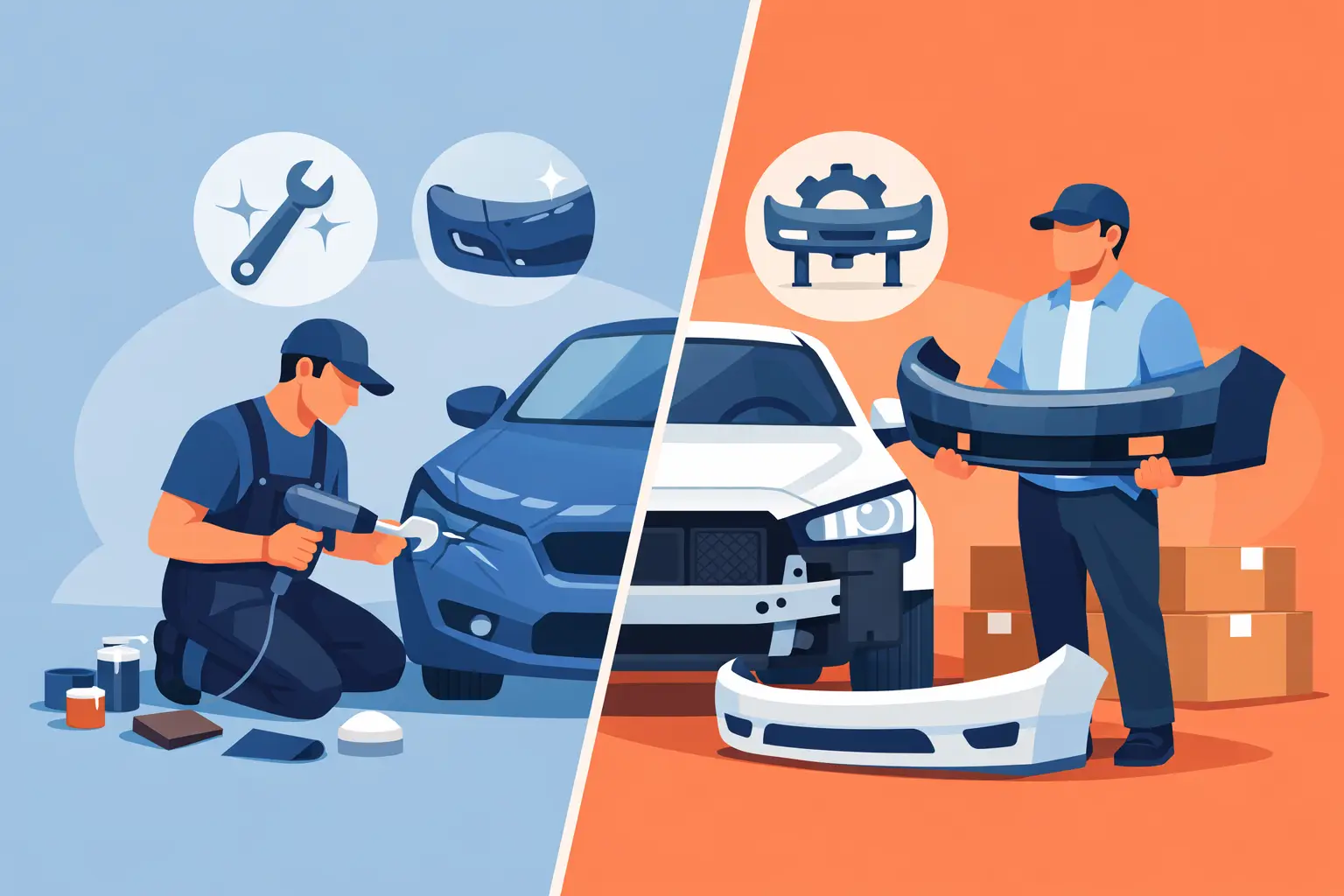
Repair Versus Replace Bumper – Which Is Right?
A parking-lot bump can leave behind more than an ugly scuff. Your bumper may look slightly pushed in, yet the foam absorber, mounting brackets, sensors, or reinforcement behind it could be damaged. When deciding whether to repair versus replace bumper damage, the right answer depends on what happened beneath the surface as much as what you can see.
For Westfield-area drivers who rely on their vehicle for commuting, school drop-offs, and daily errands, the goal is simple: restore the car safely, correctly, and without paying for work that is not needed. A professional inspection separates cosmetic damage that can be repaired from damage that calls for a new bumper cover or related parts.
Repair Versus Replace Bumper: Start With the Damage
Most modern vehicles have a bumper system made of several components. The painted outer cover is usually flexible plastic. Behind it are energy-absorbing material, brackets, sensors, wiring, and a reinforcement bar designed to help manage collision forces. Damage to one part does not always mean every part needs replacement.
Repair is often a strong option when the bumper cover has light to moderate scuffs, paint transfer, shallow dents, small cracks, or minor deformation. Certified technicians can reshape certain plastic covers, repair cracks from the back, smooth the affected area, and refinish the panel with properly matched paint. When done correctly, a repaired bumper should look clean and blend with the rest of the vehicle.
Replacement becomes more likely when there are large tears, missing pieces, deep splits near mounting points, widespread cracking, or severe warping. A cover that will not sit flush with the body can create wind noise, uneven panel gaps, and a poor finish. More importantly, damage behind the cover may affect how the vehicle responds in another impact.
The visible mark is only the first clue. A bumper that looks repairable from the outside may have broken tabs, damaged absorbers, or bent supports hidden behind it. That is why a quick inspection from a qualified collision technician matters before approving a repair plan.
When Bumper Repair Makes Sense
Repairing a bumper can save time and money when the structure and mounting areas remain sound. It is commonly the right path after a low-speed impact with a curb, shopping cart, garage wall, or another vehicle in a crowded parking lot.
A repair may be appropriate if the damage is limited to the outer cover and the bumper is still securely attached. Small scratches, paint scuffs, shallow dents, and localized cracks can often be corrected without replacing the entire part. Modern plastic-repair materials and refinishing methods allow technicians to restore many bumper covers to a smooth, durable condition.
Paint condition also affects the decision. If the affected area can be repaired and refinished while maintaining a close color match, repair is usually a practical choice. This is especially true for vehicles with standard factory colors and damage confined to one section of the bumper.
Repair is not simply the cheaper shortcut. A quality bumper repair involves proper surface preparation, plastic repair where needed, primer, color matching, clear coat, and final polishing. The work should leave the bumper looking right and functioning as intended, not just temporarily hide the damage.
Signs You Should Replace the Bumper
Replacement is usually the safer decision when the bumper cover has lost its shape, mounting strength, or ability to protect the components behind it. If the cover is hanging loose, pulling away from the fender, or repeatedly popping out of place, broken retainers or damaged attachment points may be involved.
Large punctures and tears are another concern. While small, isolated cracks may be repairable, extensive splitting can compromise the cover’s fit and durability. The same is true for damage at corners and mounting tabs, where the bumper must hold firmly against the vehicle body.
A replacement may also be necessary after a harder collision, even if the outer cover does not look dramatic. Damage to the bumper absorber, reinforcement bar, frame rails, radiator support, lights, or mechanical components must be identified and addressed. The bumper system is part of a larger safety structure, and it should never be judged on paint damage alone.
Newer vehicles add another factor: technology. Parking sensors, blind-spot monitoring, adaptive cruise control, front cameras, and radar equipment may be mounted in or behind the bumper. A hard impact can damage the components, brackets, or wiring that support these systems. Replacement and calibration may be required to make sure driver-assistance features work properly again.
Safety Features Can Change the Decision
A bumper repair should always protect more than the vehicle’s appearance. Drivers often assume that a bumper is only a plastic shell, but the surrounding components are designed to absorb energy and support safety systems during an impact.
After a collision, technicians should check for hidden damage, including loose brackets, cracked absorber material, bent reinforcements, sensor faults, and uneven panel alignment. If an airbag warning light appears, a camera image looks off-center, or parking sensors begin sounding incorrectly, do not treat it as a minor inconvenience. Those symptoms should be inspected promptly.
Proper repair may include scanning the vehicle for diagnostic trouble codes and calibrating safety equipment after parts are repaired or replaced. This is one reason a professional collision shop is a better choice than attempting a cosmetic fix at home. The paint may look fine, but the vehicle still needs to be roadworthy.
Cost Depends on More Than the Part
Many drivers start with one question: Is it less expensive to repair or replace the bumper? Repair is often less costly when damage is localized, but replacement is not automatically unreasonable or overpriced. The final cost depends on the vehicle, the extent of hidden damage, the availability of parts, paint work, sensor calibration, and labor needed to restore proper fit.
A luxury vehicle or late-model vehicle with radar sensors may require more involved work than an older car with a simple painted bumper cover. Likewise, a bumper cover may be inexpensive, but painting it to match the vehicle and transferring sensors, trim, lights, or grilles can add labor.
Insurance coverage may also affect the decision. If the damage resulted from a covered collision, your insurer may pay for repairs after your deductible. A trustworthy shop can help document visible and hidden damage, explain the estimate in plain language, and work with insurance companies without letting the process become overwhelming.
The lowest initial estimate is not always the best value. A repair that skips necessary scanning, calibration, alignment checks, or paint preparation can create problems later. The better value is work that restores the vehicle’s safety, fit, finish, and daily reliability.
What a Professional Bumper Estimate Should Include
A clear estimate should explain whether the bumper cover can be repaired or needs replacement and why. You should understand what damage was found, which parts are involved, and whether the estimate includes paint materials, refinishing, sensor work, and any required calibration.
At Kings Auto Body Shop, the inspection process is built around honest recommendations, not one-size-fits-all answers. A light scuff does not always need a full bumper replacement, and a bumper that appears fine does not automatically mean hidden damage can be ignored. Certified technicians evaluate the full collision area so drivers can make an informed decision.
Ask whether the bumper will be removed for inspection when needed. This allows technicians to check brackets, absorbers, reinforcements, wiring, and related components that cannot be evaluated properly from the outside. It is also reasonable to ask about paint matching and the shop’s guarantee on its work.
Do Not Wait on a Loose or Damaged Bumper
If your bumper is dragging, loose, cracked through, or interfering with a tire, light, sensor, or grille opening, schedule an inspection right away. A loose cover can become a road hazard, and small attachment problems can worsen with vibration, rain, and highway driving.
Even when the vehicle seems drivable, do not assume the damage is only cosmetic. Take a few photos, note any warning lights or changes in vehicle operation, and arrange a professional estimate. Fast attention can prevent a manageable repair from becoming a larger one.
Your bumper does not have to look perfect only for appearances. It should fit correctly, protect the systems behind it, and support a vehicle you can trust on every trip. Get a clear assessment, choose the repair that matches the actual damage, and restore your vehicle’s condition with confidence.