
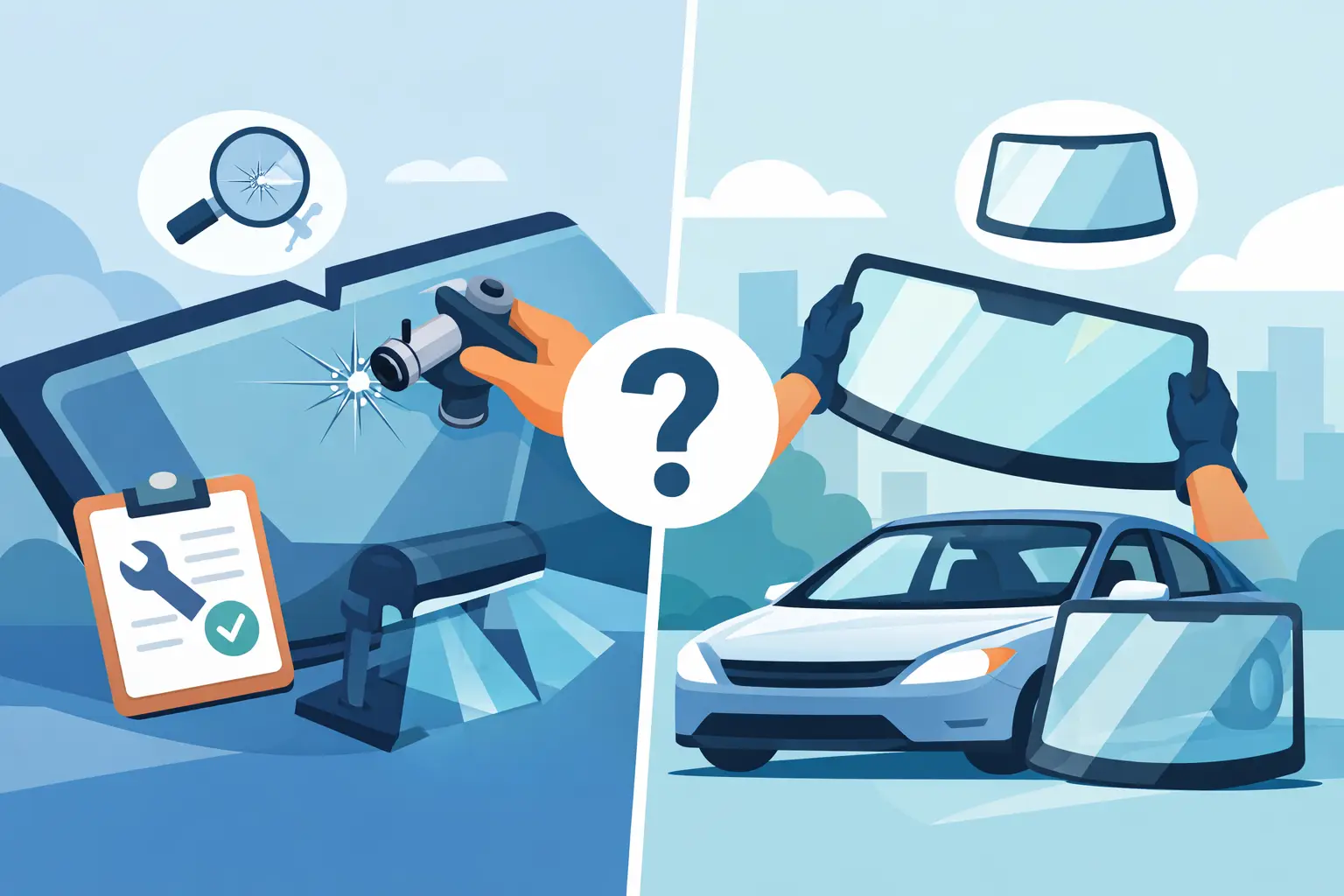
Repair Versus Replace Windshield: What Is Safer?
A stone chip on the Parkway can look minor at first. Then a cold New Jersey morning, a pothole, or one hard door close turns it into a crack stretching across the glass. The repair versus replace windshield decision is not just about saving money. Your windshield supports visibility, helps protect the passenger cabin in a collision, and gives your airbags a surface to work against.
The right answer depends on the damage, its location, the condition of the glass, and the safety systems built into your vehicle. A quick professional inspection can prevent a small problem from becoming a larger, more expensive repair.
Why Your Windshield Deserves Immediate Attention
A windshield is more than a window. It is a laminated safety component made from two layers of glass bonded around a plastic inner layer. That construction helps the glass stay together when damaged, but it does not mean every crack can be safely ignored.
A chip can collect dirt, moisture, and road salt. Once contaminants enter the break, a repair may be less effective or leave a more noticeable mark. Temperature changes also cause glass to expand and contract. That is why a small chip can suddenly spread after you run the defroster, park in direct sun, or drive over uneven pavement.
Damage in front of the driver creates another concern: distortion. Even a well-repaired chip may leave a faint blemish. If that blemish interferes with your clear view of traffic, pedestrians, lane markings, or nighttime headlights, replacement may be the safer route.
Repair Versus Replace Windshield: When Repair Works
Windshield repair is often a smart, cost-conscious choice when the damage is limited and the surrounding glass remains structurally sound. During a professional repair, a technician cleans the damaged area, injects a clear resin into the break, and cures it so the resin hardens and bonds the glass. The goal is to stop the damage from spreading and restore strength as much as possible.
Repairs are commonly possible for a small chip, bull’s-eye break, star break, or short crack. The exact limits depend on the type of damage, the vehicle, and the repair equipment being used. A chip about the size of a quarter may be repairable in many situations, but size alone does not decide the job.
Location matters just as much. Damage away from the windshield’s outer edge is generally more likely to be repaired. The edge carries significant stress, so cracks that reach it can compromise the glass more seriously. A break directly in the driver’s primary viewing area may also call for replacement, even if it is small.
Repair is usually the better option when the damage is fresh, clean, isolated, and outside critical visibility or sensor areas. It is faster than replacing the full windshield and can preserve the original factory-installed glass. For busy commuters and family drivers, that can mean less time without a vehicle and a lower out-of-pocket cost.
Still, repair does not make damage disappear completely. The break may remain faintly visible, especially when sunlight hits it. What matters is whether the repair restores safe function and prevents the damage from advancing.
When Windshield Replacement Is the Safer Choice
Replacement becomes necessary when damage is too large, too deep, too close to the edge, or positioned where it could affect safe driving. A long crack, several separate breaks, glass that has begun to delaminate, or damage penetrating both layers of glass should be evaluated carefully for replacement.
Your vehicle’s technology can also change the answer. Many newer vehicles have cameras, rain sensors, lane-departure warnings, automatic emergency braking, adaptive cruise control, or head-up display components mounted near the windshield. If a crack affects the camera area or replacement is required, the vehicle may need advanced driver-assistance system calibration afterward.
That calibration is not an optional extra. The camera needs to recognize its exact position and angle so safety features respond correctly. Proper windshield replacement means using the appropriate glass, installing it with the right materials and procedures, allowing adhesive to cure as required, and completing calibration when your vehicle calls for it.
Replacement is also wise if a previous repair has failed or a crack continues to grow. Trying to repair glass that no longer has a reliable foundation can delay the problem, not solve it. A clear, properly installed windshield gives you the visibility and protection you need every time you pull out of the driveway.
The Questions a Technician Should Ask Before Deciding
A trustworthy recommendation should not be based on a quick glance alone. A technician should inspect the size, shape, depth, and location of the damage. They should also look for moisture, debris, stress lines, prior repairs, and signs that the crack is spreading beneath the surface.
The vehicle itself matters. Is the windshield equipped with a forward-facing camera or sensors? Does it require original-equipment glass, acoustic glass, solar-control glass, or a specific tint band? Is there collision damage around the roofline, cowl, mirror mount, or windshield frame that needs attention before new glass is installed?
This is especially important after an accident. A cracked windshield may be only one part of the damage. Misalignment, bent body panels, damaged trim, or a compromised frame opening can affect how replacement glass fits and seals. Addressing the full repair properly helps prevent wind noise, water leaks, poor alignment, and future glass stress.
Cost, Insurance, and the Value of Doing It Right
Repair generally costs less than replacement, and many insurance policies cover windshield repairs with little or no deductible. Replacement costs vary more because glass type, vehicle make, embedded technology, molding, labor, and calibration all affect the price.
Do not let the lowest quote make the decision for you. An improper installation can create leaks, noise, corrosion around the windshield opening, or safety concerns during a collision. Ask what glass will be used, whether your vehicle requires calibration, and whether the work is guaranteed.
If you are filing an insurance claim after a collision, keep the process simple by getting a clear estimate and documenting the damage early. A quality repair facility can help explain what needs to be addressed and work with insurance companies while keeping you informed. The goal is not to add work that your vehicle does not need. It is to restore safe, reliable condition without surprises.
What to Do Before Your Appointment
Until the windshield is inspected, avoid blasting hot air directly onto cold damaged glass. Do not pour hot water on an icy windshield, and avoid slamming doors when possible. These sudden pressure and temperature changes can extend a crack.
Covering a fresh chip with clear tape can help keep dirt and water out temporarily, as long as the glass is dry and the tape does not block your view. Skip DIY repair kits for damage in the driver’s view, near the edge, or on vehicles with windshield-mounted cameras. Those cases deserve a trained inspection from the start.
If the crack is spreading quickly, blocks your view, or follows an accident, schedule service promptly. Kings Auto Body Shop provides careful glass replacement as part of a complete collision-repair process, with certified technicians focused on safety, fit, and finish.
A small chip may be a simple repair today. Waiting until it becomes a windshield-wide crack can take that affordable option off the table. Get the glass checked early, ask direct questions, and choose the repair that keeps every drive clear and safe.