
When Should Airbags Be Replaced After a Crash?
A collision can leave visible damage on the bumper, hood, or doors, but your vehicle’s safety system may have taken the biggest hit. If you are asking when should airbags be replaced, the clearest answer is this: any airbag that deployed in a crash must be replaced before the vehicle is safely returned to the road. The full repair may also involve sensors, seat belt pretensioners, trim pieces, wiring, and diagnostic work.
Airbags are not parts to patch, reset, or ignore. They are one-time restraint devices designed to protect occupants during a severe impact. A proper post-accident inspection gives you a clear picture of what needs attention, helps support an accurate insurance claim, and protects the people riding in your vehicle every day.
When Should Airbags Be Replaced?
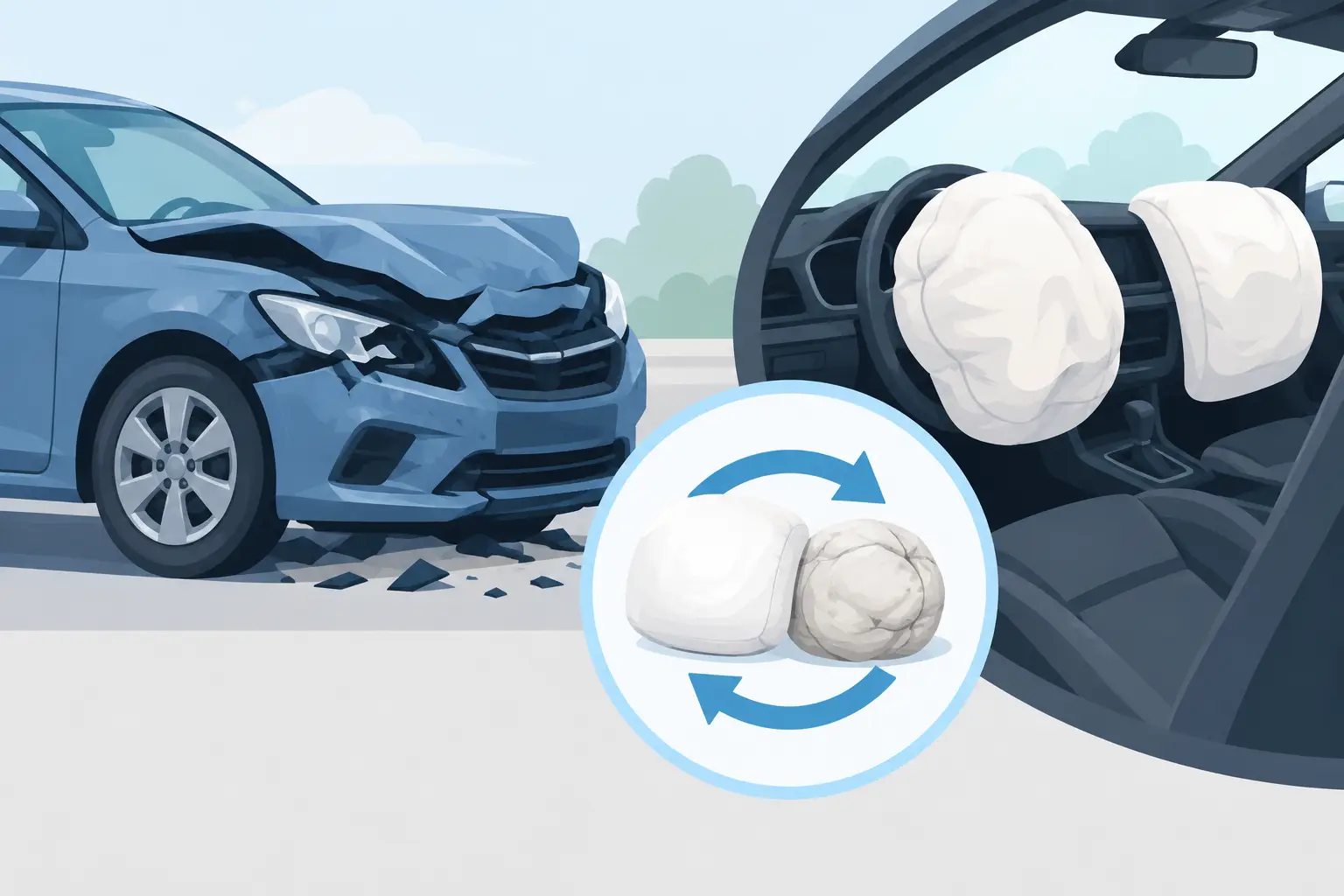
A deployed airbag needs replacement immediately as part of the collision repair process. This applies to front airbags in the steering wheel or dashboard, side-impact airbags in seats or doors, curtain airbags along the roofline, and knee airbags beneath the dash.
Once an airbag deploys, its internal inflator has been used. Folding it back into place, replacing the cover alone, or clearing a dashboard warning light does not restore its ability to protect you in another accident. The replacement airbag must be correct for the vehicle’s year, make, model, and restraint-system configuration.
However, airbag replacement is not always limited to the airbag itself. The Supplemental Restraint System, commonly called the SRS system, works as a network. Depending on the crash and the manufacturer’s repair procedures, a technician may need to inspect or replace the airbag control module, crash sensors, steering wheel components, seat belt pretensioners, seat belt buckles, wiring harnesses, and interior trim.
That is why a quick visual check is never enough after a collision. The vehicle needs professional diagnostics and a complete repair plan.
Airbags That Did Not Deploy May Still Need Inspection
Not every accident triggers an airbag. Deployment depends on the direction of impact, collision force, sensor readings, seat position, occupant detection, and the vehicle manufacturer’s programming. A vehicle can sustain substantial damage without deploying its airbags, especially in certain rear-end, side, or low-speed crashes.
If the airbags did not deploy and the SRS warning light is off, replacement may not be necessary. Still, the system should be inspected after a meaningful collision. Impact can damage a sensor, wiring connector, seat component, clock spring, or control module without producing obvious exterior clues.
If the airbag light stays illuminated after an accident, treat it as a safety concern, not a minor dashboard inconvenience. That light means the system has detected a fault and may not operate as intended in a future crash. A qualified collision repair facility can scan the vehicle, identify the stored fault codes, inspect the related components, and follow the manufacturer’s repair requirements.
Do Airbags Expire With Age?
For most modern vehicles, airbags do not have a routine replacement schedule just because they are a certain number of years old. Older advice sometimes suggested replacing airbags after 10 or 15 years, but many manufacturers no longer list a blanket expiration interval for their systems.
Age alone is not the deciding factor. Condition, recalls, warning lights, water exposure, collision history, and manufacturer guidance matter far more. If your vehicle has never been in an accident, has no SRS warning light, and has no active airbag recall, there is usually no reason to replace intact airbags solely due to mileage or age.
There are exceptions. Long-term water intrusion, flood damage, rodent damage to wiring, dashboard repairs performed incorrectly, or prior collision work can compromise the restraint system. If you bought a used vehicle with an unclear repair history, an SRS diagnostic inspection can provide valuable peace of mind.
Why Seat Belts Often Need Attention Too
Airbags and seat belts are designed to work together. During many moderate and severe collisions, seat belt pretensioners activate to rapidly tighten the belt and help position the occupant correctly before the airbag deploys.
A deployed pretensioner generally requires replacement. In some cases, the belt assembly or buckle may also need replacement according to manufacturer procedures. The belt can look normal on the outside while internal safety components have already activated.
This is one reason a low-cost repair that focuses only on body panels can leave serious safety concerns behind. A bumper may look new, but a vehicle is not fully repaired until its restraint systems, structural components, and electronic safety features have been checked and restored correctly.
Never Accept a Shortcut on Airbag Repairs
After an accident, some vehicle owners are understandably focused on getting back to work, school runs, and daily commuting quickly. Fast service matters, but airbag repairs are not a place for shortcuts.
Be cautious if a repair solution involves clearing the airbag warning light without diagnosing the problem, installing questionable used airbag components, reusing deployed parts, or hiding damage behind a new dashboard cover or seat upholstery. These practices can leave you with a vehicle that appears repaired but may not protect occupants in another collision.
Proper airbag repair starts with a scan of the SRS system and a complete damage assessment. Technicians should review the vehicle manufacturer’s procedures, inspect related components, replace required parts, perform any necessary programming or calibrations, and verify that the warning light is off only after the system passes its checks.
Modern vehicles often have cameras, radar sensors, occupant sensors, and advanced driver-assistance features located near common impact areas. Repairs may require calibrations in addition to SRS work. This is especially common after front-end collisions, bumper replacement, windshield replacement, or structural repairs.
What to Do After Airbag Deployment
If your airbags deploy, do not drive the vehicle unless a professional has confirmed it is safe to do so. Deployment can affect visibility, steering wheel components, the dashboard, seat belts, and electrical systems. In many cases, towing the vehicle to a qualified collision repair shop is the safest choice.
Take photos of the damage if you can do so safely, notify your insurance company, and keep any claim information available for the repair estimate. A thorough estimate should account for visible damage as well as diagnostic scanning and potential hidden damage. Once the vehicle is disassembled, additional repairs may be identified, particularly behind bumpers, inside doors, beneath interior panels, or around structural mounting points.
At Kings Auto Body Shop, certified technicians can help drivers understand the repair process, coordinate with insurance companies, and address both visible collision damage and the safety systems behind it. The goal is not simply to make the vehicle look repaired. It is to return it in safe, roadworthy condition.
How to Know the Repair Was Handled Correctly
Ask clear questions before approving repairs. You deserve to know whether airbags deployed, which SRS components were inspected, whether seat belt pretensioners activated, and whether diagnostic scans were completed before and after the repair.
A reputable shop should explain the findings in everyday language. They should also be upfront if additional damage is discovered after disassembly. Collision repairs can change as hidden damage becomes visible, but the process should never feel vague or secretive.
Before pickup, check that the airbag warning light turns on briefly during startup and then goes off. If it stays on, flashes, or never illuminates at all, bring it up before leaving. You should also confirm that all replaced interior panels, steering wheel controls, seats, and seat belts are properly installed and functioning.
A crash is disruptive enough without wondering whether your vehicle will protect you the next time you need it. If your airbags deployed, your warning light is on, or your vehicle has accident damage, schedule a professional inspection before putting daily miles back on the road.