Body Shop Versus Dealership: Which Repair Fits?
A damaged bumper, bent panel, or warning light can turn a normal commute into a stressful decision fast. In the body shop versus dealership question, the best choice is not always the location where you bought your car. It is the repair facility that can restore your vehicle’s safety, function, and finish with clear communication from the first estimate through final delivery.
For Westfield-area drivers, that often means looking beyond the name on the building. A dealership may be the right fit for some repairs. An experienced independent collision shop may be the better fit for others, especially when your vehicle needs bodywork, paint, frame measurement, glass replacement, or post-collision repair coordination.
Body Shop Versus Dealership: The Real Difference
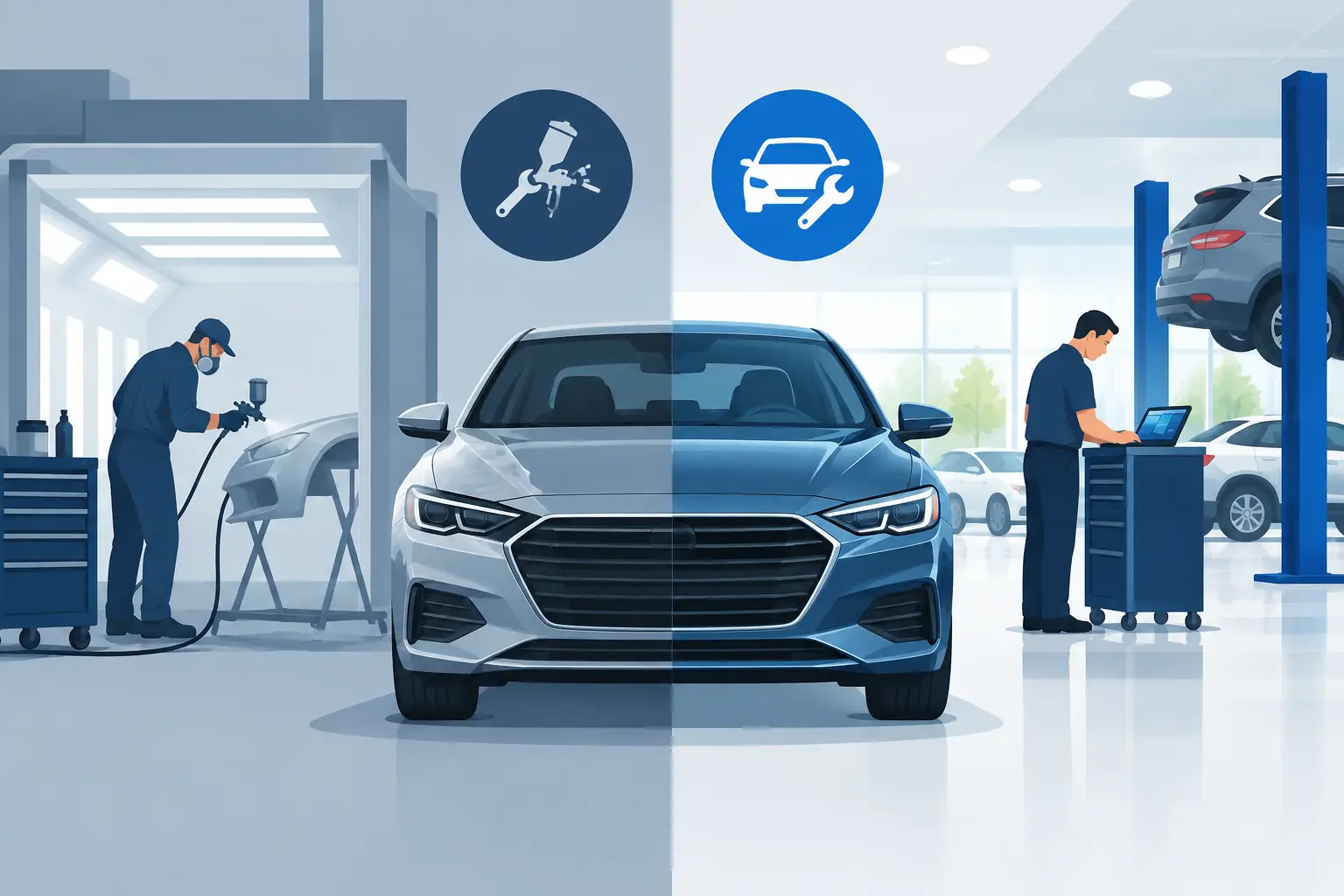
A dealership is primarily set up to sell, maintain, and service vehicles from one manufacturer. Its service department may handle routine maintenance, warranty work, diagnostics, mechanical repairs, and manufacturer recalls. Some dealerships also have a collision center, while others send collision repairs to a separate affiliated or outside facility.
A dedicated auto body shop focuses on damage caused by accidents, parking-lot impacts, fallen debris, and everyday wear. Its work centers on restoring the exterior and underlying structure of the vehicle. That can include dent removal, bumper repair, frame straightening, panel replacement, paint matching, refinishing, glass replacement, and collision-related mechanical repairs.
The key question is not whether a repair shop is independent or dealer-owned. Ask what that facility actually does every day. A shop that regularly handles collision repairs has the equipment, technician training, estimating process, and paint systems needed to address accident damage from start to finish.
When a Dealership May Be the Better Choice
There are situations where a dealership makes sense. If the issue is covered by a manufacturer warranty, tied to a recall, or involves a brand-specific mechanical concern unrelated to the collision, starting with the dealer can be practical. Dealership technicians may have direct access to manufacturer technical bulletins, proprietary diagnostic tools, and warranty authorization procedures.
A newer vehicle with complicated electronics can also benefit from manufacturer-level diagnostic information. Modern cars use cameras, radar sensors, parking sensors, lane-assist systems, and advanced airbag components. After an impact, these systems may require scanning, repair, and calibration. A quality collision shop should identify those needs and perform the required work in-house when equipped to do so or coordinate it properly when specialized programming is needed.
Still, dealer service does not automatically mean dealer collision repair. Before authorizing work, ask whether the dealership will complete the body repair at its own facility, who will paint the vehicle, and whether any part of the job will be sent elsewhere.
When an Independent Body Shop Is the Better Fit
For dents, damaged bumpers, broken glass, paint damage, panel misalignment, and structural collision repairs, an independent body shop is often built for the job. Collision technicians work with these problems every day. They know that a clean-looking repair is not enough if the bumper brackets, mounting points, safety sensors, or vehicle structure are still out of position.
An established local shop can also provide a more direct experience. You can speak with the people estimating and repairing the vehicle, get a clearer explanation of the damage, and receive updates without being passed between a sales department, service advisor, and outside vendor.
At Kings Auto Body Shop, certified technicians handle repairs ranging from small dents and bumper damage to major collision restoration. The goal is straightforward: return each vehicle in safe, roadworthy condition with a finish that looks right, not merely acceptable from across a parking lot.
Cost: Why Estimates Can Look Different
Cost is one of the first concerns after an accident, but the lowest estimate is not always the least expensive repair in the long run. Estimates can differ because repair facilities use different labor rates, parts sources, repair procedures, paint materials, and diagnostic steps.
A dealership may have higher overhead, which can affect its pricing. That does not mean its work is poor or that an independent shop will always cost less. It means you should compare what is included. One estimate might include replacing a damaged part, while another may include repairing it. One may account for sensor calibration and necessary scans, while another may not show those items until the vehicle is disassembled.
Ask for an explanation in plain language. Which panels are being repaired or replaced? Are the parts original equipment, aftermarket, recycled, or reconditioned? Is the estimate likely to change after hidden damage is found? Will the final repair include paint blending into adjacent panels when needed for a proper color match?
Honest answers matter more than a rushed number. A good shop will explain why a procedure is necessary and contact you when additional collision damage is discovered.
Parts Choices: OEM Is Not the Only Question
Many drivers assume a dealership always uses original equipment manufacturer parts and that every independent shop uses aftermarket parts. In reality, the answer depends on the repair plan, vehicle age, part availability, customer preference, and insurance coverage.
OEM parts are made by or for the vehicle manufacturer. They can be a good choice when fit, material quality, safety-system compatibility, or warranty requirements make them appropriate. Aftermarket parts are made by third-party manufacturers and can be more affordable. Recycled parts from the same make and model may also be suitable for certain non-safety-related repairs, particularly on older vehicles.
There is no one-size-fits-all answer. The right choice should be discussed before repairs begin. For a family vehicle with a damaged bumper cover, for example, the appearance of the cover is only part of the decision. The shop should also inspect the absorber, reinforcement bar, brackets, sensors, and mounts behind it.
Repair Time and Convenience Matter
When you depend on your car for work, school drop-offs, appointments, and New Jersey commuting, repair time is more than a scheduling detail. It affects your entire household.
Dealerships can be convenient if they already have your vehicle history and the needed parts are readily available. But collision work may be delayed if the dealership sends the car to another location or if its body department has limited capacity.
A dedicated body shop is designed around collision workflow. That includes damage assessment, insurance documentation, parts ordering, structural and mechanical repairs, refinishing, quality control, and final detailing. A shop that communicates early about parts delays or additional damage is helping you plan, even when the repair cannot be completed immediately.
If the car is not safe to drive, ask about towing directly to the repair facility. Moving the vehicle once, rather than arranging multiple transfers, can save time and reduce unnecessary stress.
Insurance Does Not Have to Choose the Shop for You
After a collision, an insurer may recommend a repair facility or offer a list of shops in its network. Those recommendations can be useful, but drivers generally have the ability to choose where their vehicle is repaired. You do not need to assume that the dealership or the insurer’s first suggestion is your only option.
Choose a shop that is prepared to work with your insurance company while keeping you informed. The repairer should document visible damage, communicate with the adjuster when supplements are needed, and explain the work authorization before repairs move forward.
Do not let insurance paperwork distract from the main goal: a safe, complete repair. If a panel looks fine but a warning light remains on, or if a bumper fits poorly after repair, speak up. The vehicle should be inspected as a whole, not treated as a collection of cosmetic parts.
Questions That Help You Choose With Confidence
Before selecting a repair facility, ask whether it performs collision work on-site and whether its technicians are trained for the type of damage your vehicle has. Ask how it handles scans and calibration after an accident, what parts it recommends, and whether its repairs are guaranteed.
You should also ask about turnaround expectations, communication during the repair, paint color matching, and what happens if hidden damage is found. Clear answers are a strong sign that the shop takes both your vehicle and your time seriously.
For a newer luxury vehicle, a dealership may offer useful manufacturer-specific support. For a commuter car with collision damage, a skilled local body shop may provide faster, more personal service and the same careful attention to safety-critical details. The best decision comes from the repair plan, not the logo out front.
After an accident, take a breath, document the damage, and get a detailed estimate from a shop that will speak plainly about your options. The right repair partner will help you restore your vehicle’s condition today and get back on the road with confidence.