Essential Post Collision Safety Checks After a Crash
A collision can leave a vehicle looking driveable when it is not truly safe to operate. That is why essential post collision safety checks should begin at the scene and continue before you return to your normal commute. A scraped bumper, cracked light, or dented door may be obvious, but damage behind those panels can affect steering, braking, visibility, airbags, and the vehicle’s ability to protect you in another impact.
For drivers in Westfield and throughout New Jersey, the goal is not to diagnose every issue on the roadside. It is to protect people first, document what happened, and avoid making a damaged vehicle work harder than it should. Here is what to check, when to stop driving, and why a professional inspection is worth scheduling even after a minor fender bender.
Start With Safety at the Scene
If you can do so without putting anyone at risk, move the vehicle out of active traffic. Turn on the hazard lights, set the parking brake, and check yourself and your passengers for injuries. Call 911 when there are injuries, a dangerous traffic location, fire, leaking fuel, disabled vehicles, or significant property damage.
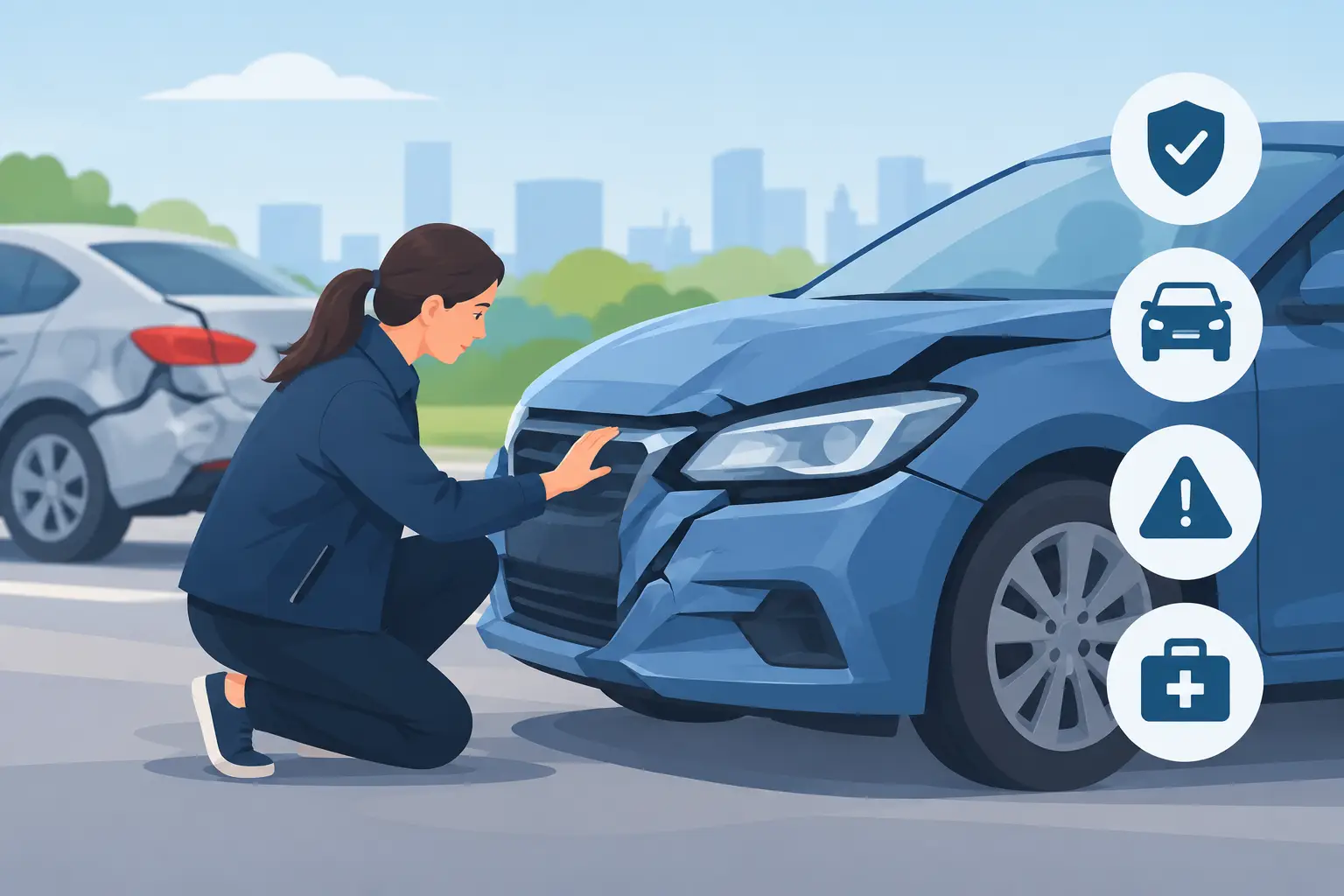
Before getting back behind the wheel, take a moment to look and listen. Is there smoke, steam, a strong fuel smell, or fluid pooling under the car? Is the hood bent upward, rubbing a tire, or blocking your forward view? Any of these conditions calls for towing rather than a short drive home.
Do not touch loose wiring, hot engine components, or an airbag that has deployed. Keep clear of traffic, exchange the necessary information, and photograph the vehicles, roadway, plates, visible damage, and any warning lights when it is safe. Clear photos make the estimate and insurance process less stressful later.
Essential Post Collision Safety Checks Before Driving Away
Some damage is a clear stop sign. Other problems require a calmer look. If the vehicle appears safe enough to move from immediate danger, these checks can help you decide whether it should be driven a very short distance or transported to a repair facility.
- Tires and wheels: Look for a flat tire, sidewall cut, bent wheel, tire rubbing against the body, or a wheel that is sitting at an unusual angle. A hard curb strike or side impact can damage suspension parts even when the tire still holds air.
- Lights and glass: Check headlights, brake lights, turn signals, hazards, mirrors, windshield, and side windows. A broken lens, loose headlight, shattered glass, or blocked mirror reduces your ability to see and be seen.
- Fluid leaks: Clear water under a vehicle may be normal air-conditioning condensation. Colored, oily, slick, or strong-smelling fluid is different. Coolant, oil, brake fluid, transmission fluid, and fuel leaks need immediate attention.
- Steering and brakes: With the engine running, pay attention to a stiff steering wheel, brake pedal that feels soft or sinks, grinding, pulling, vibration, or a vehicle that will not track straight. Do not test these problems at highway speed.
- Warning lights and displays: A check engine light may not always mean an emergency, but an airbag, brake, temperature, battery, oil-pressure, or power-steering warning should not be ignored after an impact.
- Body panels and undercarriage: Make sure no bumper cover, splash shield, trunk lid, hood, or other panel is loose enough to drag, fly open, or contact a tire. Damage underneath the vehicle can be easy to miss from the driver’s seat.
If any check raises doubt, choose a tow. Towing is often less expensive and far safer than risking further mechanical damage, a roadside breakdown, or a loss of control.
Do Not Judge Damage by the Bumper Alone
Modern bumpers are designed to absorb and distribute force. That is good for occupants, but it also means the outer cover can hide damage to reinforcements, brackets, sensors, cooling components, and structural mounting points.
A low-speed parking-lot hit might only require bumper repair and refinishing. It might also crack a mounting tab, knock an alignment sensor out of position, or damage components behind the bumper. The difference is not always visible without removing panels and measuring the vehicle properly.
The same applies to doors and fenders. A door may still latch after a collision but have misaligned hinges, damaged intrusion protection, or a window regulator that will fail later. A fender dent can interfere with a tire during turns. Small gaps between body panels can signal that something beneath them has shifted.
This is where the trade-off matters. Continuing to drive may feel convenient if the car starts and rolls, especially when work, school, and family schedules are waiting. But a quick professional assessment can prevent a small repair from becoming tire damage, cooling-system trouble, uneven tire wear, or a larger safety concern.
Check for Changes on the First Short Drive
Only make a short, low-speed drive if the vehicle passes the basic checks and there are no leaks, loose parts, warning lights, or handling concerns. Keep the radio off and the windows down if conditions allow. You are listening for new noises and feeling for changes that were not there before.
Pay attention to whether the car pulls left or right, the steering wheel sits crooked, the brakes vibrate, or the vehicle shakes as speed increases. Listen for clunks over bumps, scraping underneath, clicking during turns, or wind noise around a door or window. Notice whether the engine temperature rises or whether a burning smell develops.
Stop driving if any symptom appears. Alignment problems are not merely an inconvenience. They can point to bent steering or suspension components and can wear out tires quickly. A vehicle that pulls, shakes, leaks, overheats, or brakes differently should be inspected before it returns to regular use.
Airbags, Seat Belts, and Safety Technology Need Professional Attention
A deployed airbag is not a cosmetic repair. The airbag system, seat belt pretensioners, sensors, wiring, dashboard components, and restraint control module may all require inspection and replacement. Never attempt to reset an airbag warning light by disconnecting the battery or using a quick electronic fix.
Seat belts deserve the same attention. Check that each belt pulls out smoothly, retracts correctly, buckles securely, and is not cut, frayed, twisted, or locked. After a significant impact, a belt may have activated its pretensioner even if it looks normal.
Many newer vehicles also rely on cameras, radar, and sensors for backup alerts, automatic emergency braking, lane assistance, parking assistance, and adaptive cruise control. A repair that restores the paint and panel fit but skips proper sensor calibration can leave those features unreliable. Quality collision repair means restoring safety systems as well as appearance.
Get a Written Estimate and Protect Your Claim
Contact your insurer promptly, but remember that an initial estimate may not reveal every issue. Hidden damage is common, particularly when a shop removes damaged parts and completes a full inspection. A reputable repair facility should explain what it finds, identify safety-related work clearly, and communicate with the insurance company when additional damage is discovered.
Keep copies of the police report, photos, claim number, towing receipt, rental information, and repair paperwork. Ask questions about parts, paint matching, structural measurements, calibration, and the repair warranty. Clear answers help you understand what is being repaired and why.
At Kings Auto Body Shop, certified technicians can inspect collision damage, coordinate with insurers, and arrange responsive towing when your vehicle should not be driven. Whether the damage is a loose bumper or a heavier collision, the right repair starts with an honest evaluation of the vehicle’s condition.
When Towing Is the Smart Call
There is no prize for driving a damaged car farther than necessary. Arrange a tow if there is an airbag warning, brake concern, fluid leak, overheating, wheel or tire damage, severe body damage, poor visibility, steering change, or any uncertainty about the vehicle’s condition.
That decision protects more than your car. It protects your passengers, other drivers, and your ability to make a clean repair without additional damage. Get a professional inspection, keep the repair process transparent, and return to the road only when the vehicle feels and performs the way it should.