Hidden Rust Signs That Put Your Car at Risk
A small paint bubble near a wheel well can look harmless after a long New Jersey winter. But hidden rust signs often mean moisture has already reached metal beneath the paint, where corrosion can spread quietly through a panel, seam, or structural area. Catching it early can save you from a larger repair, protect your vehicle’s appearance, and, in some cases, prevent a real safety concern.
Rust is not always an emergency, and not every spot requires major body work. The right repair depends on where the corrosion is located, how deeply it has spread, and whether the metal still supports a safety-related component. What matters is getting an honest assessment before a minor issue turns into holes, weakened mounting points, or failing body panels.
Why Rust Hides So Well
Modern vehicles have painted finishes, protective coatings, seam sealers, underbody shields, and drainage paths designed to keep water away from exposed steel. Those protections work well until a rock chip, curb scrape, collision, clogged drain, or damaged seam gives moisture an opening.
Once water gets behind paint or under a protective coating, the corrosion may travel farther than the visible spot suggests. Salt, slush, and repeated freeze-thaw cycles make the problem worse. That is why drivers around Westfield, Newark, Elizabeth, and the rest of New Jersey should pay close attention after winter and after any impact that scratches, bends, or cracks a body panel.
A clean-looking exterior is not always proof that the metal underneath is sound. Rust can begin inside a door seam, under a fender liner, around a windshield channel, or below the vehicle where road spray collects. By the time it becomes easy to see, the repair may be more involved.
Hidden Rust Signs to Watch For
Paint bubbles, blisters, and raised edges
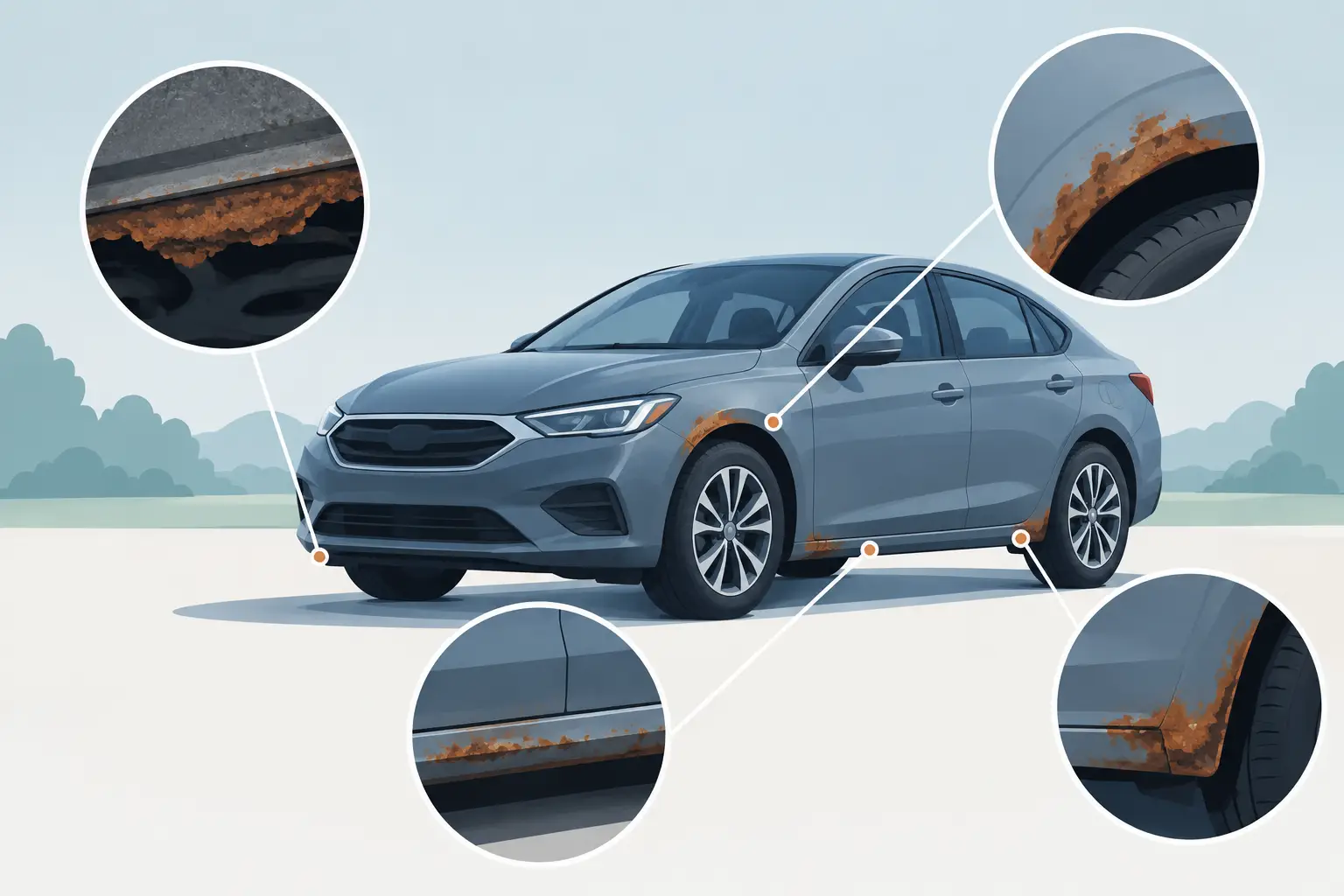
Paint should sit flat against the vehicle’s surface. If you notice tiny bubbles, a raised patch, or paint that feels rough around a chip, rust may be forming underneath. This often appears along the lower edge of doors, rocker panels, wheel arches, trunk lids, and the hood’s front edge.
Do not scrape or pick at the area to see how deep it goes. Breaking the paint can expose more metal. A body technician can inspect the panel, determine whether the corrosion is limited to the surface, and recommend whether sanding and refinishing, panel repair, or replacement makes the most sense.
Brown staining around seams and trim
Rust does not always show up as a large orange patch. A narrow brown line where two panels meet, around a molding clip, behind a license plate, or near a door hinge can be an early warning. Water may be trapped behind trim or seam sealer, especially if the area has been damaged in a minor accident.
Look closely at the bottom corners of doors, the trunk opening, the fuel door area, and the seams around the windshield and rear glass. Rust near glass deserves quick attention because corrosion can affect the mounting channel and allow water to enter the vehicle.
Flaking undercoating or peeling seam sealer
Underbody coatings are meant to protect metal from water, sand, and road salt. If that coating is cracked, loose, blistered, or peeling, moisture may be working beneath it. You may notice it while washing the car, changing a tire, or looking underneath after parking.
The underbody is not a place for guesswork. Rust around suspension mounting points, subframes, brake line brackets, jacking points, and structural rails should be inspected professionally. Surface discoloration on a nonstructural shield is different from corrosion that is thinning metal near parts your vehicle relies on to steer, stop, and absorb crash forces.
Wet carpet or a musty interior smell
A damp cabin can be a hidden rust clue. Water leaks from a damaged door seal, windshield area, sunroof drain, trunk seal, or body seam can soak carpeting and sit in hidden areas for weeks. That moisture can create odor, mold concerns, electrical problems, and corrosion under the carpet or around the floor pan.
Check for dampness after heavy rain or a car wash. If windows fog up more than usual, the trunk smells musty, or you find unexplained moisture in the footwells, do not wait for visible rust. Finding the leak is just as important as treating any corrosion it has caused.
Drain holes that are blocked or dripping dirty water
Doors, rocker panels, and other body sections have drain paths that let water escape. When dirt, leaves, road debris, or old repairs block those paths, water stays trapped inside the panel. A door that sounds like it has water sloshing inside, or one that releases dirty brown water when opened, needs attention.
It may be tempting to poke at a drain hole with a screwdriver or wire. That can damage coatings or push debris deeper into the panel. A careful inspection and proper cleaning protect the drainage system without creating another exposed spot.
Changes after a fender bender or scrape
Even a low-speed impact can break paint, bend a wheel opening, crack seam sealer, or separate a bumper from the body. If the damage is repaired only on the surface, the exposed area behind it can retain water and begin corroding.
After a collision, pay attention to new paint cracks, loose wheel-well liners, gaps between panels, damaged splash shields, or a bumper that no longer sits flush. These issues can let road spray reach places that were protected before the accident. Prompt collision repair is about more than restoring the finish. It helps preserve the vehicle’s original protection against moisture.
Areas That Need a Closer Look
You do not need to crawl under your vehicle every weekend, but a few regular checks can make a difference. During a wash or while loading groceries, look along the lower doors, wheel wells, rocker panels, trunk lip, hood edge, and around the windshield. Open each door and inspect the bottom seam in good light.
The areas underneath deserve an inspection during routine service, tire rotation, or seasonal maintenance. Ask for attention to brake and fuel line areas, suspension mounts, floor pans, frame sections, subframes, and jacking points. On unibody vehicles, what many drivers call the frame is integrated into the body structure, so corrosion in the wrong location can be serious.
Older vehicles and cars that spend time outdoors need more frequent checks. So do vehicles that have previous collision repairs, aftermarket body modifications, or recurring water leaks. Still, age alone does not determine the condition. A newer car with unrepaired paint damage can develop corrosion faster than an older vehicle that has been carefully maintained.
When Surface Rust Becomes a Safety Issue
Light surface rust on a removable bracket or a small stone chip is often repairable when handled early. The concern grows when rust causes metal to flake away, leaves holes, spreads beneath a panel, or affects parts that carry weight or secure safety equipment.
Take corrosion seriously if you see holes in a rocker panel or floor, heavy scaling underneath the vehicle, rust around suspension or seat-belt mounting areas, loose body panels, or a windshield surround that is deteriorating. Do not assume undercoating will solve advanced rust. Covering corrosion without removing or properly treating it can trap moisture and hide a worsening problem.
A qualified auto body inspection can separate cosmetic corrosion from damage that needs structural or mechanical attention. That clarity matters when you are deciding whether to repair a vehicle, replace a panel, or address related collision damage through insurance.
What a Proper Rust Repair May Involve
The repair process should match the actual condition of the metal. For early surface corrosion, the damaged area may be cleaned to sound metal, treated, primed, color matched, and refinished. The goal is not simply to cover the stain. The affected metal and surrounding paint edge must be prepared correctly so the repair lasts.
If corrosion has penetrated a panel, a technician may need to remove the weakened section and repair or replace the panel. That work can involve welding, seam sealing, corrosion protection on hidden surfaces, and refinishing to match the surrounding color. On structural areas, repair decisions require extra care because appearance cannot come before proper strength and fit.
There is a trade-off: the cheapest visible touch-up may cost less today, but it may not stop rust that is already behind the paint. A clear estimate should explain what is visible, what may be found after disassembly, and why a particular repair approach is recommended.
Simple Habits That Help Prevent Rust
Wash your vehicle regularly during winter, paying special attention to wheel wells and the underside where salt collects. Clean leaves and debris from the cowl area near the windshield and from trunk channels. Repair paint chips, damaged liners, loose trim, and collision damage before water can work its way behind the finish.
Parking in a garage can help, but a damp garage with poor airflow is not always better than a dry outdoor space. What helps most is keeping the vehicle clean, allowing it to dry, and dealing with damage promptly. If you recently hit a curb, scraped a parking barrier, or noticed a fresh chip after highway driving, take a photo and monitor it rather than forgetting about it.
If you spot bubbling paint, brown staining, or underbody corrosion, bring the vehicle in for a clear assessment. At Kings Auto Body Shop, certified technicians can evaluate the affected area, explain the repair options, and help protect the safety and finish your family depends on. Acting while the problem is still small gives your vehicle the best chance to stay solid, clean, and road-ready.