Car Frame Straightening Service After a Crash
A hard impact can do more than crack a bumper or leave a dented door. It can shift the structure underneath your vehicle by an amount that is difficult to see but serious enough to affect handling, tire wear, alignment, and crash protection. A professional car frame straightening service identifies that hidden damage and restores the vehicle to the manufacturer’s structural measurements.
For drivers in Westfield and across central and northern New Jersey, the goal after an accident is not simply to make a car look better. It is to make sure it drives, tracks, and protects passengers the way it should. That requires a precise inspection, the right equipment, and technicians who know when a repair is safe and when replacement is the smarter choice.
What Car Frame Straightening Really Means
Many modern vehicles do not have a separate, traditional frame like older trucks and SUVs. Instead, they use a unibody design, where the structural rails, floor, pillars, and other components work together as one integrated shell. In everyday language, people still call structural repair “frame straightening,” and the term covers both conventional frame work and unibody straightening.
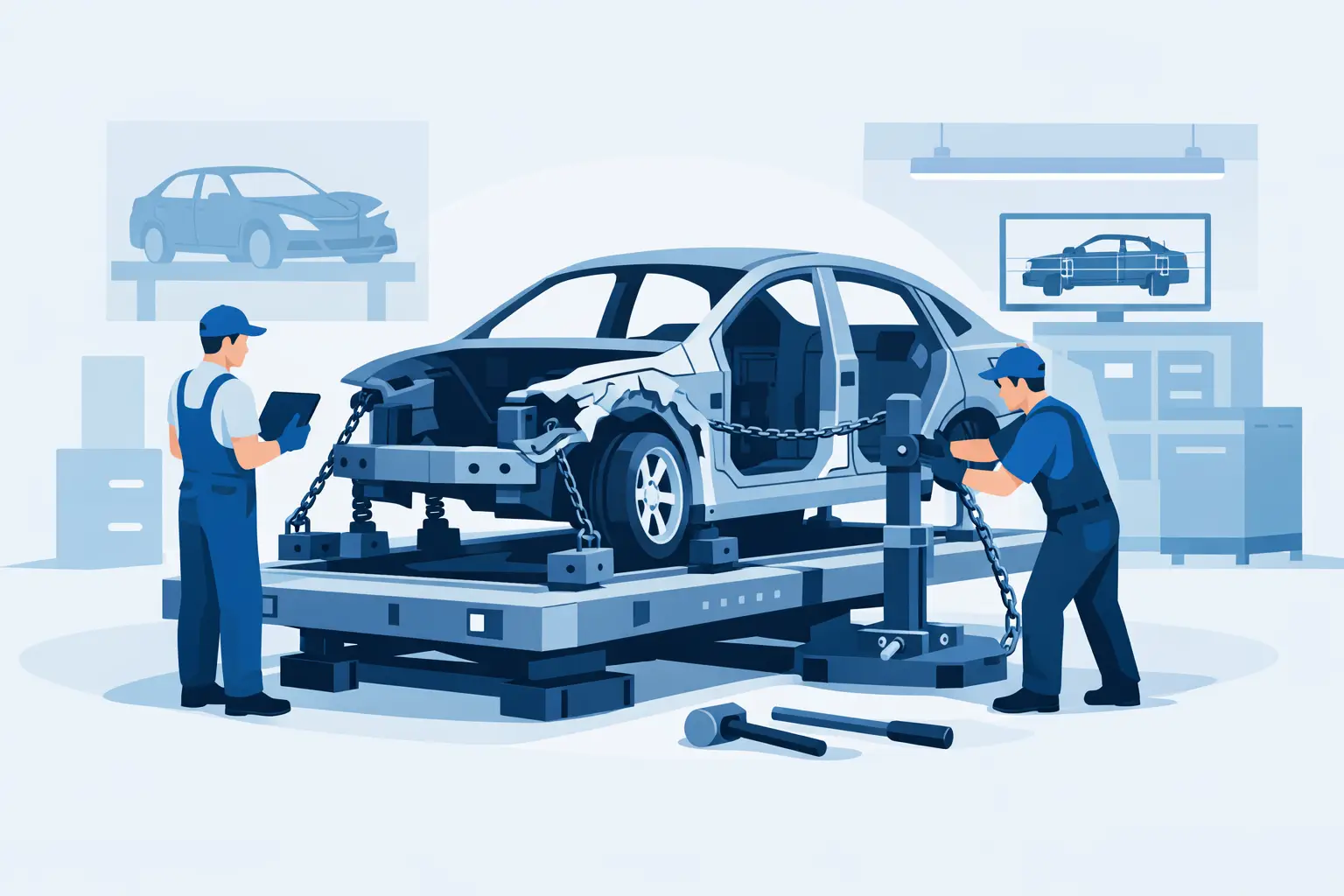
The process is not a matter of pulling a damaged area until it looks straight. Certified technicians secure the vehicle to a precision measuring and pulling system, compare damaged points to factory specifications, and use controlled force to return structural components to their proper location. Measurements are checked throughout the repair, not guessed at by eye.
This distinction matters because a car can look normal from the outside while the structure remains slightly out of position. A few millimeters can affect panel fit, wheel alignment, sensor calibration, and the way impact energy is managed in another collision.
Signs You May Need a Car Frame Straightening Service
You do not need to diagnose structural damage yourself. After any significant accident, a complete collision inspection is the safest move. Still, certain issues can signal that the vehicle needs more than cosmetic body work.
A vehicle that pulls to one side after an alignment, has a steering wheel that no longer sits centered, or develops uneven tire wear may have structural or suspension-related damage. Doors, the trunk, or hood that suddenly stick, rub, or leave uneven gaps can also point to movement in the surrounding structure. New vibrations, unusual road noise, or a vehicle that does not feel stable at highway speed deserve attention as well.
Visible clues matter too. Wrinkles in the metal around the trunk floor, inner fenders, roof pillars, or frame rails should never be ignored. Paint cracks near seams can indicate that a panel or structural area flexed during impact. Damage may come from a rear-end collision, a curb strike, a side impact, or even a low-speed crash that hits the wheel and suspension at the wrong angle.
The important trade-off is this: not every accident requires structural straightening, but assuming it is unnecessary can lead to costly problems later. A proper estimate and measurement inspection gives you a clear answer before repairs begin.
How the Structural Repair Process Works
A dependable repair starts with documentation. The shop examines visible collision damage, scans for diagnostic trouble codes when appropriate, and checks the suspension, steering, wheels, and underbody. Structural measuring equipment establishes whether key points are within factory specifications or have shifted.
If straightening is needed, the vehicle is mounted securely on a frame machine or specialized pulling system. Technicians use hydraulic pulls and carefully placed anchoring points to move damaged rails or structural sections in controlled increments. The process may involve several pulls from different directions because collision forces rarely travel in a straight line.
Measurements are verified during and after the pull. This is where advanced technology and experienced judgment work together. Pulling too little can leave the structure misaligned. Pulling too aggressively can create additional stress or damage. The correct repair follows vehicle-specific procedures and accounts for high-strength steel, aluminum, sensors, wiring, and other modern components.
Once the structure is restored, the shop can address related repairs such as suspension work, bumper replacement, glass replacement, panel repair, paint preparation, color matching, and refinishing. A final alignment and roadworthiness check help confirm that the vehicle drives correctly before it is returned to you.
Why Precision Protects More Than Appearance
Straight body panels and a fresh finish are satisfying, but structural accuracy is the real foundation of a safe collision repair. Your vehicle’s crumple zones, seat belt mounting areas, suspension geometry, and airbag systems are designed around specific locations and measurements. When the structure is out of position, those systems may not perform as designed.
Proper straightening also protects your investment. Misalignment can cause premature tire wear, recurring alignment issues, water leaks, poor door seals, and uneven panel gaps. Those problems may not show up on the day you pick up your vehicle, which is why choosing a repair facility based only on the lowest estimate can be risky.
Fast service still matters, especially when you rely on your vehicle for work, school, family errands, and commuting. But fast should mean organized estimates, prompt parts coordination, efficient repair planning, and clear communication. It should never mean skipping structural measurements or rushing final quality checks.
What to Ask Before Authorizing Repairs
After a collision, ask the shop whether structural measurements were taken and whether any damage was found in the frame or unibody. Ask how the repair plan follows manufacturer procedures, whether an alignment will be checked after repairs, and how any required sensor or safety-system calibration will be handled.
It is also reasonable to ask how the shop works with your insurance company. Insurance paperwork can feel like one more burden after an accident. A collision center that communicates clearly, provides a detailed estimate, and coordinates with all insurance companies can make the process much less stressful. Keep your claim information, photos, police report if available, and towing details together so the estimate can move forward without avoidable delays.
If your car is not safe to drive, do not try to force it home or across town. A damaged wheel, suspension component, or structural area can make the vehicle unpredictable. Arrange responsive towing to a qualified repair facility instead.
Choose a Shop Equipped for Structural Collision Repair
Frame and unibody work require more than standard dent repair tools. Look for licensed and insured collision professionals with certified technicians, precision measuring equipment, and the ability to handle the entire repair from structural work through paint and final finishing. You should receive straightforward answers about what was found, what must be repaired, and what the repair will cost.
At Kings Auto Body Shop, drivers receive free same-day estimates, personalized communication, and guaranteed work backed by more than 20 years of collision-repair experience. Whether the damage involves a minor impact or a major collision, the repair plan should focus on restoring safety, proper function, and a clean finished appearance.
After an accident, trust the feeling that something may be off. Schedule an inspection promptly, get the structural measurements checked, and give your vehicle the careful repair it needs before the next commute, school run, or highway trip.