Collision Damage Signs You Should Never Ignore
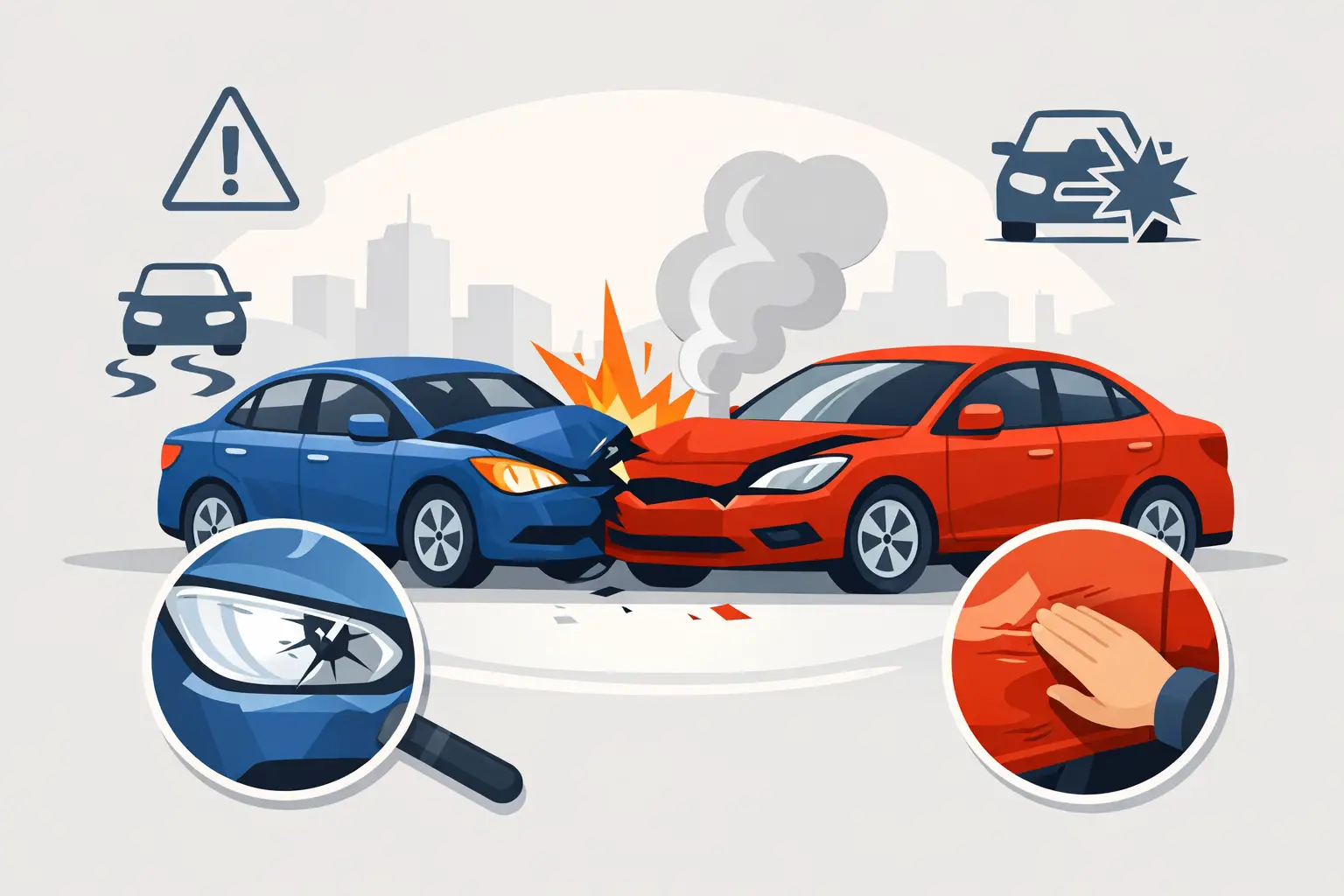
A low-speed impact in a parking lot can leave more behind than a scuff on the bumper. Collision damage signs are not always obvious from the driver’s seat, and a vehicle that looks mostly fine may still have damage affecting its handling, safety systems, or ability to protect you in another crash. If your car was hit, even lightly, a prompt professional inspection gives you clear answers before a small issue becomes a larger repair.
Collision Damage Signs to Check After an Accident
Start with a calm walk-around in a safe, well-lit area. Look at the vehicle from several angles instead of standing directly in front of it. Reflections in the paint can reveal dents, ripples, and uneven body panels that are easy to miss at first glance.
Scratches, cracked paint, dents, and broken trim are visible signs, but they are not merely cosmetic. A deep scratch can expose metal to moisture and road salt, creating conditions for rust. A cracked bumper cover may also hide damaged mounting points, impact absorbers, sensors, or brackets behind it.
Pay close attention to panel gaps. The spaces around the hood, trunk, doors, headlights, grille, and fenders should look even. If a hood sits higher on one side, a door is harder to close, or the trunk no longer lines up cleanly, the impact may have shifted a panel or affected the structure beneath it. Do not force a misaligned door, hood, or trunk. It can worsen the damage or create a safety issue.
Look for loose pieces under the car and around the wheel wells. A hanging splash shield, displaced bumper, damaged wheel-well liner, or fluid on the pavement all deserve immediate attention. Clear, green, pink, orange, brown, or dark fluid can point to a leak. If you see a leak, smell fuel, notice steam, or find a damaged tire, avoid driving the vehicle until it has been evaluated.
Changes You Can Feel While Driving
Some of the most meaningful collision damage signs show up only once the car is moving. Your vehicle should track straight on a level road, respond predictably to steering input, and brake without pulling, shaking, or unusual noise.
A steering wheel that is suddenly off-center, drifting to one side, or vibrating at speed can signal alignment, wheel, tire, or suspension trouble. The cause may be as simple as a knocked-out alignment, but it can also involve a bent component or wheel damage. Continuing to drive on a misaligned vehicle can wear tires quickly and make the car less stable in wet or emergency conditions.
Listen for new sounds after a crash. Clunks over bumps, grinding when turning, squealing brakes, rattling body panels, or humming from one wheel should not be written off as normal. A minor curb strike or side impact can affect suspension parts, wheel bearings, brake components, or underbody shields.
Braking changes need fast attention. If the brake pedal feels soft, the vehicle pulls during braking, warning lights appear, or you hear metal-on-metal sounds, arrange service right away. The same is true if the engine runs hotter than normal, the air conditioning suddenly stops working, or you smell something burning. Impacts can disturb components far from the visible point of contact.
Warning Lights Are Not Just a Dashboard Problem
Modern vehicles rely on sensors, cameras, radar units, wiring, and modules to support safety features. A small bumper impact can affect parking sensors, blind-spot alerts, backup cameras, adaptive cruise control, lane-assist functions, or automatic emergency braking.
If an airbag, check engine, ABS, traction control, or driver-assistance warning light appears after an accident, treat it as a reason for an inspection, not a reason to wait and see. Airbags and seat belt pretensioners are designed to work as a system. Even when an airbag does not deploy, an accident can create fault codes or affect equipment that needs proper diagnosis.
A warning light does not automatically mean your vehicle is unsafe to move a short distance, but it does mean the system needs professional attention. The right repair may include scanning for codes, repairing damaged components, and recalibrating safety systems after the body and mechanical work are complete. Skipping that final step can leave features unavailable or inaccurate.
Hidden Damage Matters More Than the Paint
It is understandable to focus on the dent you can see. Your car’s appearance matters, and quality color matching and refinishing protect its value. Still, the parts behind the exterior panel often matter more.
Bumpers are built to absorb certain impacts, but the cover is only one part of the assembly. Behind it may be reinforcement bars, absorbers, brackets, sensors, lighting wiring, cooling components, and structural mounting areas. A bumper can look acceptable after an impact while its internal parts are cracked or pushed out of position.
The same applies to front-end damage. A grille, headlight, or fender may be the visible casualty, while the radiator support, condenser, hood latch, or frame area has also moved. At the rear, a damaged trunk floor, rear body panel, or quarter panel can affect how the trunk closes and how the vehicle manages impact energy.
Frame or unibody damage is especially important to assess correctly. Today’s vehicles are engineered with specific crumple zones and structural measurements. Proper repair requires trained technicians, accurate measuring equipment, and a repair plan based on the vehicle’s condition. Pulling a panel until it looks straight is not the same as restoring structural integrity.
When a Small Accident Can Wait – and When It Cannot
Not every paint transfer or shallow door ding requires an emergency appointment. If the car drives normally, no warning lights are on, no fluids are leaking, and the damage is clearly limited to the exterior finish, you may have some flexibility in scheduling cosmetic repair. Even then, get an estimate soon, particularly if paint has chipped down to bare metal.
Do not delay if the vehicle has steering or braking changes, damaged lights, tire or wheel damage, a loose bumper, fluid leaks, a door or hood that will not latch, warning lights, or any concern about safe operation. Towing is the smarter choice when the car is not clearly roadworthy. It protects you, other drivers, and your vehicle from additional damage.
Insurance timing can also matter. Take clear photos of the damage, the accident scene when possible, and any visible debris. Save the other driver’s information and your claim details. Then choose a repair shop that can explain what is visible, what may be hidden, and what repairs are necessary before work begins. A clear estimate helps remove uncertainty from an already stressful situation.
What a Complete Collision Inspection Should Include
A trustworthy inspection looks beyond the first dent. It considers the exterior panels, bumper assemblies, glass, lights, wheels and tires, suspension, steering, mechanical components, structural areas, and electronic safety systems. It also checks panel fit, paint condition, and whether the vehicle needs alignment or calibration after repairs.
The repair approach depends on the impact and the vehicle. Paintless dent repair may be ideal for an accessible dent with intact paint. A damaged bumper may be repairable, or replacement may be safer and more cost-effective if tabs are broken or sensors are affected. Some repairs call for refinishing a single panel, while others require careful blending for a consistent color match.
At Kings Auto Body Shop, certified technicians can evaluate both obvious and hidden damage, coordinate with insurance companies, and provide a free same-day estimate when possible. The goal is not to sell unnecessary work. It is to identify what your vehicle needs to be safe, properly functioning, and finished with care.
Your vehicle carries your commute, your family, your errands, and the routines that keep life moving. If something feels different after an accident, trust that instinct. Get the damage checked early, ask direct questions, and restore your vehicle’s condition before the next drive turns a manageable repair into a bigger problem.