How to Spot Frame Damage After a Car Accident
A light hit in a parking lot can leave a dent you can see. A harder collision can leave damage you cannot see at all – and that is often the greater concern. Knowing how to spot frame damage gives you a better sense of when your vehicle needs more than cosmetic repair. If your car was struck, hit a curb, slid into a guardrail, or was involved in a front- or rear-end accident, do not assume it is safe simply because it still drives.
Modern vehicles are designed to absorb crash energy in specific areas. That protects occupants, but it can also mean the underlying structure has shifted, bent, or weakened. A professional inspection is the surest answer, especially after a significant impact. Still, there are warning signs every driver should know before getting back to the daily commute.
What Frame Damage Means on a Modern Vehicle
Many drivers picture a separate steel frame running beneath the body, like the construction found on older cars and many trucks. Some SUVs, pickups, and commercial vehicles still use that body-on-frame design. Most passenger cars, however, use a unibody structure, where the frame and body are engineered as one system.
In either case, structural damage can affect the way the vehicle handles a collision, how panels and parts fit together, and whether safety systems perform as designed. Damage may occur in the rails, crossmembers, suspension mounting points, radiator support, trunk floor, rocker panels, or crumple zones. It does not need to look dramatic from the outside to matter.
A bent bumper cover or cracked headlight is visible. A shifted rail behind those parts may not be. That is why a complete collision estimate should look beyond the surface.
How to Spot Frame Damage: Signs You Can Notice
The most useful clues usually show up in the vehicle’s alignment, handling, and body gaps. One sign alone does not prove the frame is bent, since worn tires, a suspension problem, or a damaged wheel can create similar symptoms. But several signs after an accident are a strong reason to schedule an inspection.
Uneven gaps between body panels
Look along the hood, doors, fenders, trunk lid, and bumper. The gaps should appear even and consistent from one side to the other. If the hood sits higher on one corner, the trunk no longer closes squarely, or a door rubs against the fender, the structure or mounting points may have moved.
Pay attention to panels that suddenly require extra force to open or latch. A door that sticks after an accident is not always a simple hinge adjustment. It may indicate that the opening itself is no longer square.
The vehicle pulls, wanders, or has an off-center steering wheel
After a collision, your car should track straight on a level road when you briefly loosen your grip on the wheel. If it pulls left or right, wanders in the lane, shakes at speed, or requires constant steering correction, have it checked promptly.
An off-center steering wheel is another concern. It may be caused by a wheel alignment issue, but collision damage can also affect suspension components and the points where they connect to the vehicle’s structure. An alignment alone may not solve the problem if the underlying mounting area has shifted.
Tires wear unevenly after the accident
Check the tread on all four tires. New uneven wear, particularly on one edge of a tire, can point to an alignment or suspension issue. If the accident happened weeks ago and your tires are now wearing much faster than usual, do not keep replacing tires without finding the cause.
A technician can measure alignment angles and compare them to manufacturer specifications. If those angles cannot be brought into range through normal adjustments, structural inspection becomes even more necessary.
New noises, vibrations, or a rougher ride
Listen for clunks, creaks, rattles, or scraping sounds when turning, braking, going over bumps, or entering a driveway. Feel for vibration through the steering wheel, floor, or seat. These symptoms can come from many sources, including bent wheels, loose splash shields, or damaged suspension parts, but they should never be ignored after impact.
A vehicle that feels unstable, bouncy, or lower on one corner also needs immediate attention. Continuing to drive can cause additional damage and make the vehicle harder to control in an emergency.
Visible ripples, cracks, or buckling underneath
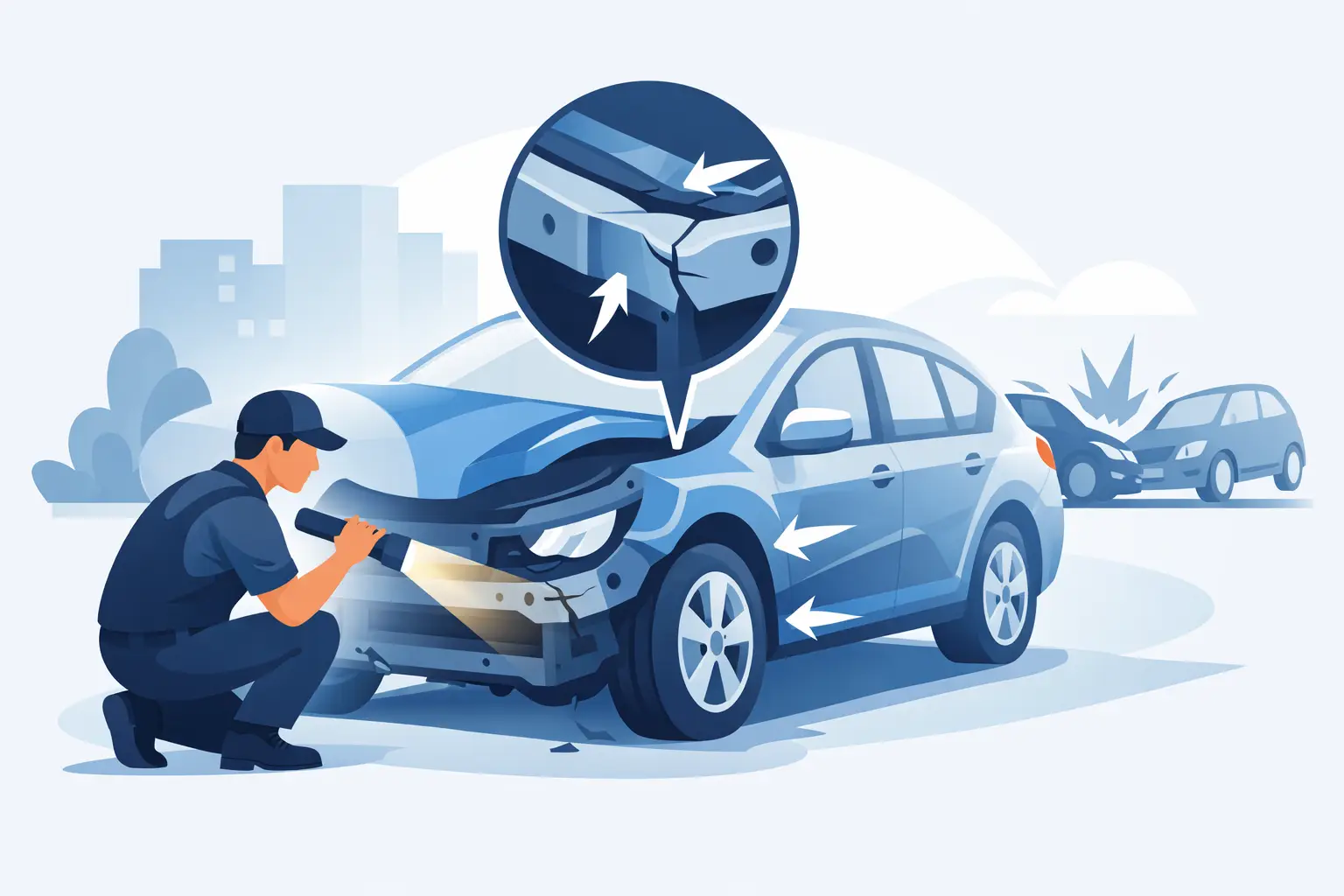
If you can safely look under the car without crawling beneath an unsupported vehicle, check for obvious signs of impact. Fresh scrapes, crushed metal, cracked underbody panels, leaking fluid, or a visibly bent component are all reasons to stop and have the car inspected.
Inside the trunk or under the hood, look for wrinkled metal, cracked seam sealer, uneven weld areas, or distorted mounting brackets. These details can be easy to miss, especially beneath carpet, trim, and plastic covers. Never rely on a quick driveway look as a final diagnosis.
Why a Car Can Look Fine and Still Be Structurally Damaged
A vehicle can have serious hidden damage with only minor paint or bumper damage on the outside. Bumpers are designed to absorb low-speed impacts, but the force can travel behind the cover and affect reinforcement bars, brackets, cooling components, sensors, or rails.
Rear impacts can be just as deceptive. A trunk lid may still close, while the trunk floor or rear body panel has been pushed inward. Side impacts may damage rocker panels, door openings, and suspension points even when the doors appear mostly intact.
This matters because modern cars rely on precise measurements. Cameras, radar sensors, airbags, seat belt systems, headlights, and advanced driver-assistance features all depend on components being positioned correctly. Proper repair is about restoring the vehicle’s designed structure, not just making the exterior look polished again.
When You Should Stop Driving and Arrange Towing
Some situations call for more than a cautious drive to the repair shop. Arrange towing if you see fluid leaking, a tire rubbing the body, a wheel sitting at an unusual angle, smoke, a strong fuel smell, severe steering pull, or a hood or trunk that will not stay latched.
You should also avoid driving if airbags deployed, warning lights remain on after the crash, or the car makes loud scraping or grinding sounds. These conditions may signal mechanical, electrical, or structural damage that can affect your safety on the road.
If you are unsure, choose caution. A tow is often less expensive and far less stressful than risking a breakdown, tire failure, or another accident on a busy New Jersey road.
What a Professional Frame Inspection Looks For
A qualified collision repair shop does more than visually inspect the exterior. Technicians check panel fit, suspension geometry, steering behavior, underbody components, and structural mounting locations. Advanced measuring equipment compares key points on the vehicle to factory specifications, identifying damage that the eye cannot reliably detect.
If frame straightening is needed, the goal is not to force metal into an approximate shape. The structure must be measured and corrected carefully, using the right equipment and repair procedures for that vehicle. Depending on the collision, safe repair may also require parts replacement, welding, suspension repair, glass replacement, sensor calibration, and refinishing.
There is a trade-off to consider after a severe crash: repairability depends on the extent and location of the damage, the vehicle’s age and value, manufacturer repair guidance, and insurance coverage. A trustworthy shop should explain what the inspection found, what repairs are needed, and why. You deserve clear answers before authorizing work.
Protect Your Safety Before Small Problems Grow
Do not wait for a door to stop closing or tires to wear out before checking a vehicle that took a hard hit. Early inspection can prevent unsafe driving, reduce the chance of related damage, and give you the documentation needed for an insurance claim.
At Kings Auto Body Shop, certified technicians use professional repair technology to inspect collision damage, explain the findings clearly, and restore vehicles with safety and appearance in mind. If your car does not drive, steer, close, or sit the way it did before an impact, trust that instinct. Get a professional assessment and restore your confidence behind the wheel.