Unibody Damage Repair Guide for Safer Cars
A collision can leave behind more than a cracked bumper or dented door. On many modern vehicles, force from an impact can travel through the body structure beneath the visible panels. This unibody damage repair guide explains what that means, what to watch for, and why proper structural repairs matter before your car goes back on the road.
For busy drivers in Westfield, Elizabeth, Newark, and surrounding New Jersey communities, the goal is simple: get clear answers quickly, protect your safety, and restore your vehicle correctly. A car that looks fine from the outside may still need professional measuring and repair after a meaningful impact.
What Unibody Damage Means
Unlike older body-on-frame vehicles, most passenger cars, SUVs, crossovers, and minivans use unibody construction. The vehicle’s frame and body are engineered as one connected structure. Reinforced sections in the front, sides, roof, floor, and rear work together to manage crash energy and support the vehicle’s weight.
That design helps manufacturers build vehicles that are lighter, more fuel-efficient, and better able to protect occupants in a crash. It also means damage in one area can affect alignment or strength somewhere else. A front-end collision, for example, may affect the radiator support, inner fender apron, suspension mounting points, or rails behind the bumper cover.
Not every collision causes serious unibody damage. A low-speed parking-lot scrape may require only cosmetic repair. But when an accident involves enough force to bend structural components, deploy airbags, shift wheel alignment, damage the suspension, or change how doors close, the vehicle needs a thorough inspection.
Signs Your Vehicle May Have Structural Damage
Visible damage is an obvious reason to schedule an estimate, but drivers should also pay attention to changes in how the vehicle drives and functions. After an accident, your car may have unibody damage if it pulls to one side, the steering wheel is no longer centered, or it vibrates at highway speed.
Uneven gaps around the hood, trunk, doors, or fenders can also signal a problem. Doors that suddenly stick, need extra force to latch, or allow more wind noise than before should not be ignored. The same is true if the hood or trunk will not sit flush, or if a bumper appears slightly uneven after an impact.
Look beneath the vehicle only when it is safe to do so. Crumpled metal, leaking fluids, loose shields, or a wheel sitting at an unusual angle are reasons to stop driving and arrange towing. Continuing to drive with damaged steering, suspension, cooling, or structural components can turn a repairable situation into a larger safety issue.
Damage Is Not Always Easy to See
Modern vehicles have plastic bumper covers, sound insulation, underbody panels, sensors, and safety components that can hide damage. A bumper can spring back into place while the absorber, reinforcement bar, mounting brackets, or structural rails behind it remain damaged.
That is why a visual walk-around is only the first step. A proper collision inspection may include disassembly, electronic scanning, computerized measuring, suspension checks, and a review of manufacturer repair procedures. The repair plan should be based on what the vehicle actually needs, not what can be seen from a few feet away.
How a Professional Unibody Repair Is Performed
A safe repair starts with diagnosis, not pulling metal. Certified technicians inspect the impact area, document visible damage, check for hidden issues, and determine whether the vehicle can be driven safely. If towing is the better choice, use it. Protecting the vehicle from further damage matters as much as starting the repair promptly.
The shop then compares the vehicle’s critical measurements to factory specifications. Advanced measuring equipment identifies whether structural mounting points, rails, or other components have moved. This is especially important because even a small shift can affect wheel alignment, panel fit, steering response, and the performance of safety systems.
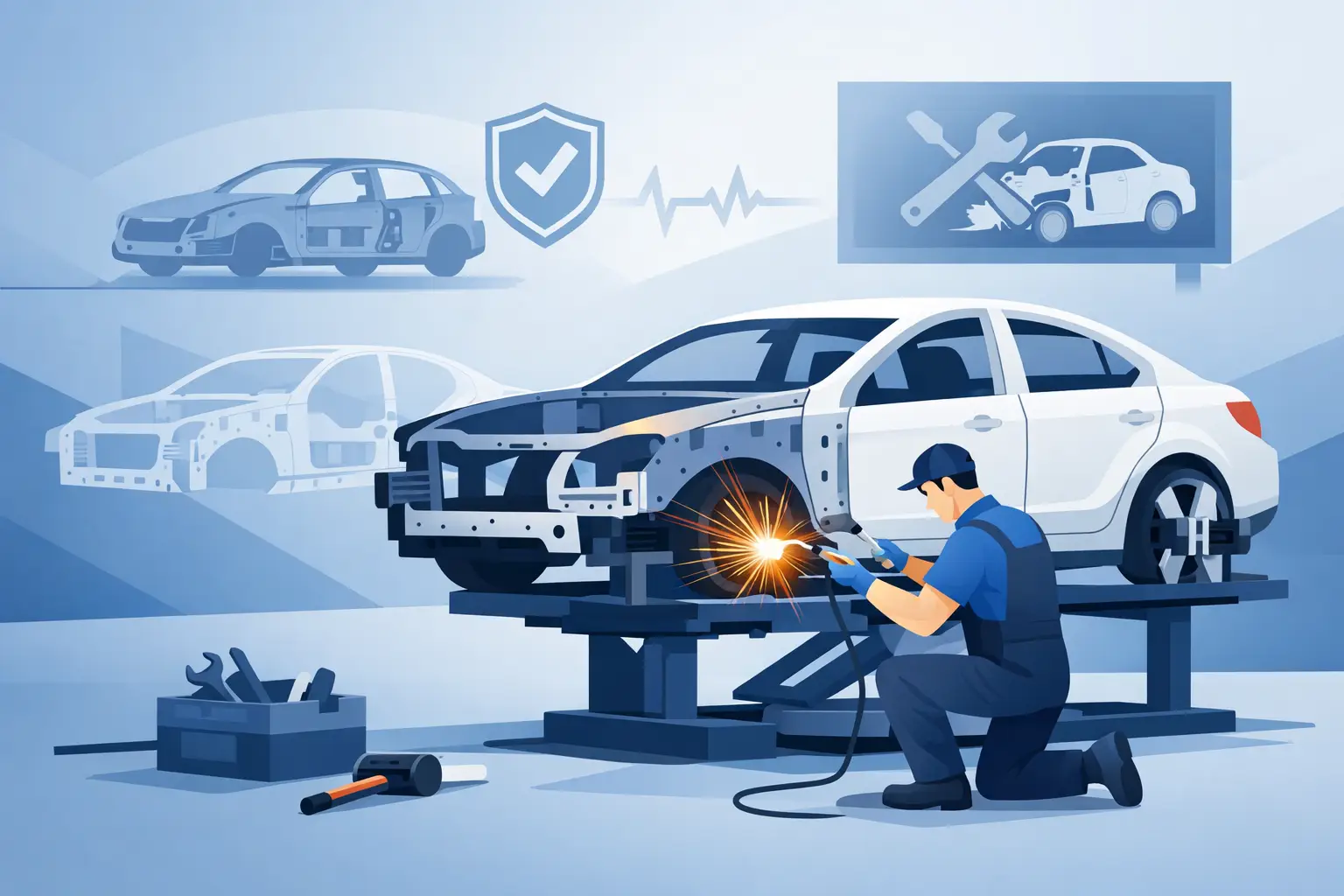
If correction is needed, the vehicle is secured to specialized equipment and carefully returned toward its specified dimensions. This is controlled structural work, not a quick pull with a chain. Depending on the manufacturer’s repair instructions and the severity of damage, some sections may be straightened while others must be replaced. High-strength steel, aluminum, bonding materials, weld locations, and heat restrictions all require the correct process.
After structural repairs are complete, technicians repair or replace related mechanical and cosmetic components. That can include suspension parts, radiator supports, headlights, bumper assemblies, glass, fenders, doors, and trim. The vehicle may also need wheel alignment, airbag system work, sensor calibration, and diagnostic scans before delivery.
Finally, repaired panels are prepared, color-matched, painted, and refinished for a clean appearance. Good collision repair is not a choice between safety and looks. Your vehicle should be structurally sound, operate correctly, and look cared for when the work is finished.
Why Proper Repair Methods Matter
The least expensive estimate is not always the best value. Structural repairs are not the place for shortcuts, used parts that do not fit correctly, or techniques that ignore manufacturer procedures. A poor repair can lead to uneven tire wear, alignment problems, water leaks, excessive road noise, or panels that fail to fit properly.
More importantly, improper repairs can affect how a vehicle manages force in a future collision. Crumple zones and reinforced areas are designed to work in specific ways. When those areas are altered without the proper tools, materials, and measurements, the vehicle may not perform as intended.
There is also a practical ownership concern. If you plan to sell or trade in your car later, a documented professional repair gives you a stronger record than a repair with unclear workmanship. Keep copies of estimates, repair orders, photos, and any calibration or alignment documentation provided by the shop.
What to Do After a Collision
First, check for injuries and contact emergency services when needed. Move the vehicle only if it is safe and permitted. Take photos of the vehicles, road conditions, visible damage, and relevant information at the scene.
Next, notify your insurance company and schedule a professional damage inspection. Insurance estimates are an important starting point, but they can be written before the vehicle is disassembled. Hidden damage is common, and a repair facility may need to submit a supplement after closer inspection. That is a normal part of the collision-repair process, not a sign that someone made a mistake.
Ask clear questions before work begins. You should understand what structural areas were inspected, whether measuring is needed, which parts will be repaired or replaced, and whether your vehicle requires wheel alignment or electronic calibration. A trustworthy shop will explain the process in everyday language and keep you informed if additional damage is found.
When Is a Vehicle Too Damaged to Repair?
Some unibody damage can be repaired safely and effectively. Other damage may be too extensive or too costly relative to the vehicle’s value. The answer depends on the location of damage, the vehicle’s age and condition, required parts, safety-system repairs, labor costs, and the insurance company’s total-loss threshold.
A vehicle is not automatically a total loss because it has structural damage. Likewise, a vehicle should not be repaired simply because it still starts and drives. The right decision comes from accurate measurements, a complete repair plan, and an honest discussion of the costs and safety requirements.
Choose a Shop That Can Handle the Whole Repair
Unibody repairs require more than paint and dent work. Look for a licensed and insured collision shop with trained technicians, modern measuring and repair equipment, insurance coordination experience, and the ability to manage structural, mechanical, paint, glass, and calibration needs in one organized process.
At Kings Auto Body Shop, drivers receive clear estimates, responsive towing when needed, and repair work focused on both safety and finish quality. Whether the damage is a small fender-bender or a major collision, getting an inspection early can prevent uncertainty from following you down the road.
If your vehicle is pulling, rattling, sitting unevenly, or simply does not feel right after an accident, trust that instinct. Arrange a professional inspection before your next commute, school pickup, or highway trip.