
Car Door Alignment Repair Guide for Safer Driving
A door that needs a hard slam to close is not just annoying on a busy morning. It can be a sign that the hinges, latch, striker, or surrounding body structure have moved. This car door alignment repair guide explains what to look for, what can cause the problem, and when a professional repair is the safest way to protect your vehicle.
What Proper Door Alignment Should Look Like
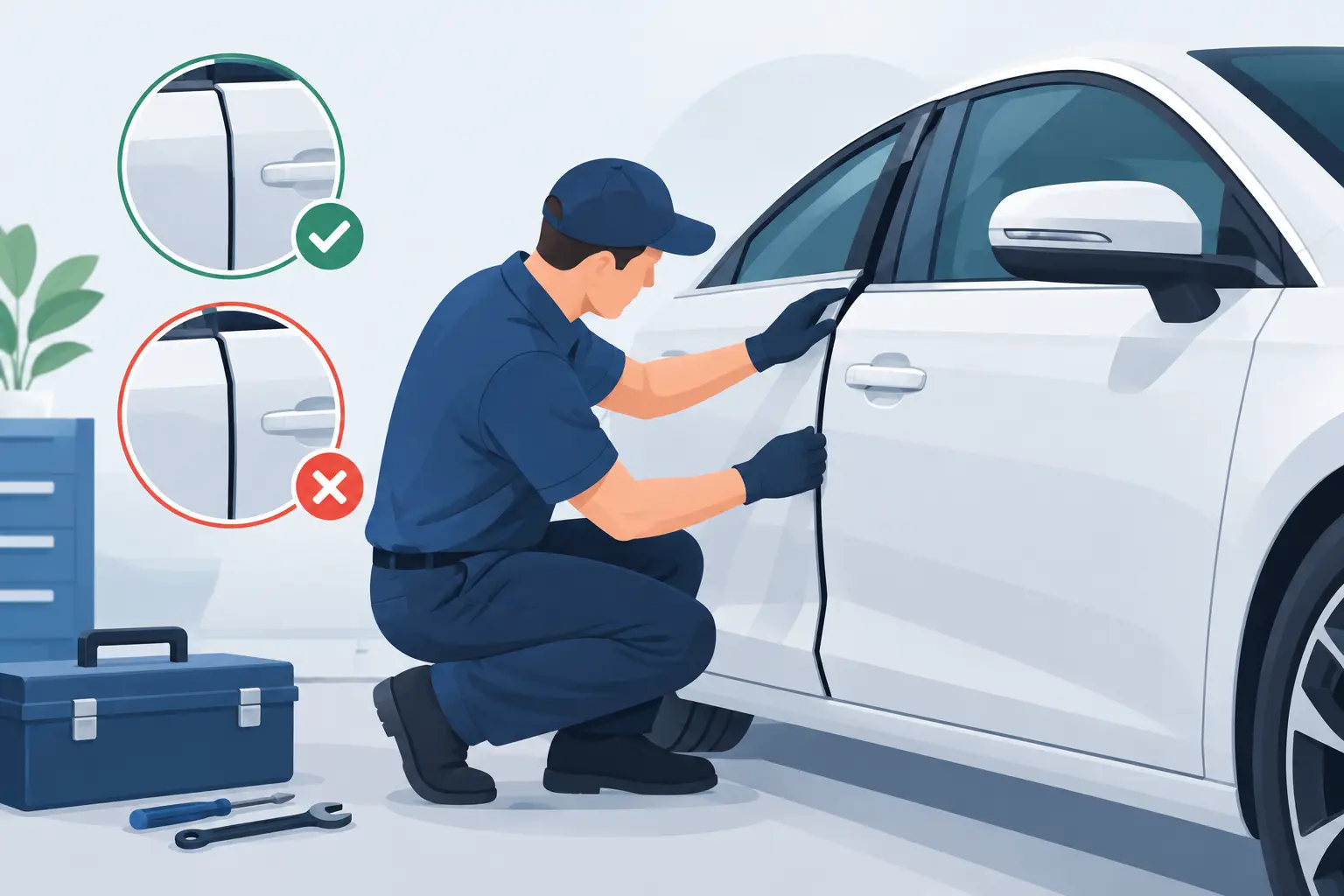
A correctly aligned car door should open smoothly, sit flush with the surrounding body panels, and latch securely without being lifted, pushed, or slammed. The gaps around the top, bottom, and sides of the door should look even. When the door is closed, it should not rub the fender, catch on the rocker panel, or stick out farther than the rear quarter panel.
Most drivers notice an alignment problem after a parking-lot bump, a side-impact collision, strong wind catches an open door, or repeated wear on an older vehicle. Sometimes the issue appears slowly. Hinge pins and bushings can wear down over time, especially on a heavy driver-side door that is opened dozens of times each day.
Do not assume a door that still closes is safe. If the latch does not fully engage or the door has shifted after an accident, it may not provide the protection it should in another impact. Misalignment can also create wind noise, water leaks, damaged weatherstripping, and premature wear on the latch assembly.
Signs Your Car Door Is Out of Alignment
The clearest warning is a door that sags when it is opened. Hold the outer edge of the open door carefully and lift it slightly. Excess movement can point to worn hinge pins, loose hinges, or damaged mounting points. Avoid pulling hard or using this test if the door is already rubbing nearby panels.
Other common signs include:
- The door needs to be slammed, lifted, or pushed down before it latches.
- The gaps around the door are uneven or noticeably wider on one side.
- The door rubs the fender, rocker panel, trim, or striker area.
- You hear wind noise, see water inside the cabin, or notice a torn door seal.
- The latch clicks but does not hold securely, or the door pops back open.
- Power locks, window switches, speakers, or door sensors stop working after an impact.
A door that sits low at the rear edge often has a hinge-related issue. A door that is flush but refuses to latch may have a striker that moved or a damaged latch. If the entire door opening looks distorted, the concern may be more serious than the door itself. Damage to the pillar, rocker panel, frame, or unibody structure requires a proper collision inspection.
Car Door Alignment Repair Guide: Find the Real Cause First
Door alignment is not a one-size-fits-all adjustment. The right repair depends on what moved and why it moved. Making a quick adjustment without checking the cause can hide a larger problem and make the fit worse.
Worn hinges, pins, and bushings
On vehicles with age or high mileage, hinge components can develop play. The door drops slightly when opened, then misses the striker as it closes. Replacing worn pins or bushings can restore the door’s original position, but the work must be done carefully. A door is heavier than it looks, and its position affects the fender gap, latch engagement, seals, wiring, and trim.
Loose or shifted hinge bolts
A collision or forceful door opening can shift hinge bolts where the door attaches to the body. Adjustment may be possible, but even a small movement changes several panel gaps at once. Technicians support the door, mark the original position, make controlled adjustments, and repeatedly check how the door opens, closes, and sits against the body.
A moved striker or latch issue
The striker is the metal loop mounted on the body that the door latch grabs. If it has shifted, the door may appear close to aligned but still rattle, resist closing, or sit too far inward or outward. A worn latch can create similar symptoms. The correct repair may involve adjustment, replacement, or both.
Hidden collision or structural damage
After a side collision, even a minor-looking dent can transfer force into the door shell, hinges, pillar, or rocker panel. Modern vehicles are designed with precise crumple zones and sensor systems. If the door opening is no longer square, simply moving the hinges or striker will not restore proper fit or safety.
This is where advanced measuring equipment matters. A qualified body shop can inspect panel gaps, mounting points, internal reinforcements, and structural dimensions before recommending repairs. If frame or unibody correction is needed, it should be completed before final door fitting, paintwork, and refinishing.
Can You Adjust a Car Door Yourself?
Minor striker adjustments can sometimes be handled by an experienced do-it-yourself owner with the correct tools and vehicle-specific repair information. But it is easy to create a new problem. A striker that is set too far inward can pull the door against the weatherstrip and cause leaks or difficult closing. Set too far outward, it can leave the door loose and noisy.
Hinge adjustment carries more risk. Door hinges are under load, bolts can be tight or hidden, and a slipping door can damage paint, dent nearby panels, or cause injury. Modern doors may also contain side-impact components, wiring harnesses, keyless-entry hardware, speakers, and sensors. Disconnecting or handling these parts incorrectly can trigger warning lights or create additional repairs.
If the door only needs a gentle lift to latch and there is no accident damage, a technician may find a straightforward hinge or striker correction. If you see creased metal, chipped paint at the hinge area, unusual panel gaps, a damaged pillar, or a door that will not latch reliably, skip the home fix. Have the vehicle inspected before driving it regularly.
Why Door Alignment Affects Safety and Appearance
A well-fitted door does more than make your car look cared for. It helps the latch engage as designed, supports the weather seal, reduces road noise, and keeps the vehicle’s body lines consistent. Proper alignment also prevents the door edge from chipping paint or cutting into adjacent panels every time it opens.
For families, commuters, and anyone driving daily through Westfield, Elizabeth, Newark, and surrounding New Jersey roads, a secure door is basic peace of mind. A child should not have to struggle with a rear door that sticks. A driver should not wonder whether a door will stay shut on the highway. Those concerns deserve a real inspection, not a temporary workaround.
Insurance may cover door alignment when the issue is connected to a covered collision. Documentation helps. Take photos of visible damage, note when the problem began, and avoid forcing the door repeatedly. A repair facility can assess the damage, prepare an estimate, and work with the insurance process while explaining what the vehicle actually needs.
What a Professional Door Alignment Repair Involves
Professional repair begins with inspection, not guesswork. The technician checks the hinges, latch, striker, weatherstrips, wiring, and surrounding panels. They also look for paint damage, distorted mounting locations, and evidence that the door opening or structural components have moved.
From there, repairs may include replacing hinge hardware, repairing or replacing the door shell, adjusting the striker, restoring damaged body panels, or correcting structural measurements. The door is then fitted and tested repeatedly. It should open without binding, latch with normal effort, sit flush, and maintain consistent gaps.
If paint is damaged during the collision, refinishing is completed only after the body fit is correct. This matters because a beautiful color match cannot compensate for a door that sits unevenly or rubs the fender. At Kings Auto Body Shop, certified technicians use advanced repair methods to address both the safety and appearance side of collision repairs, with clear estimates and guaranteed work.
Do Not Wait on a Door That Will Not Latch
If your door will not close securely, avoid driving the vehicle except when necessary to get it repaired. Do not rely on bungee cords, tape, or forcing the latch shut. Those temporary measures can fail and may cause more damage to the door, trim, or electrical components.
A door that closes but has new wind noise, leaking, rubbing, or uneven gaps should also be checked soon. Early adjustment can sometimes prevent damage to the latch, seals, paint, and neighboring panels. If the problem followed a collision, schedule an inspection right away so the repair can restore the fit, finish, and safe operation your vehicle needs.