How to Inspect Door Gaps After a Collision
A door that looks almost right can still tell you a lot about a vehicle after an accident. Knowing how to inspect door gaps helps you spot visible signs that a fender, door, hinge, latch, or structural area may have shifted. You do not need to diagnose the repair yourself, but a careful look can help you decide whether your vehicle needs prompt professional attention.
Door gaps are the spaces between the door and the surrounding body panels. On an undamaged vehicle, those spaces should look consistent from top to bottom and side to side. A small variation can be normal, especially on an older vehicle, but a sudden change after a fender bender, sideswipe, parking-lot impact, or major collision deserves a closer inspection.
Start With a Clean, Well-Lit Walkaround
Park on level ground during daylight if possible. Dirt, road salt, and heavy shadows can hide a misaligned panel or make a normal gap look worse than it is. Wash or wipe the door edges, the fender, rocker panel, quarter panel, and door jamb before looking closely.
Stand a few feet away first. Look down the length of the vehicle from the front and rear rather than focusing only on the impacted area. A door may be slightly out of position, but the panel lines around it can make the problem easier to see. Check both sides of the car when you can. The opposite side often provides the best visual reference.
Avoid judging alignment from one angle alone. Reflections, curved body lines, and uneven pavement can fool the eye. Move slowly around the vehicle and view each gap straight on, from above, and from near the ground.
How to Inspect Door Gaps for Uneven Spacing
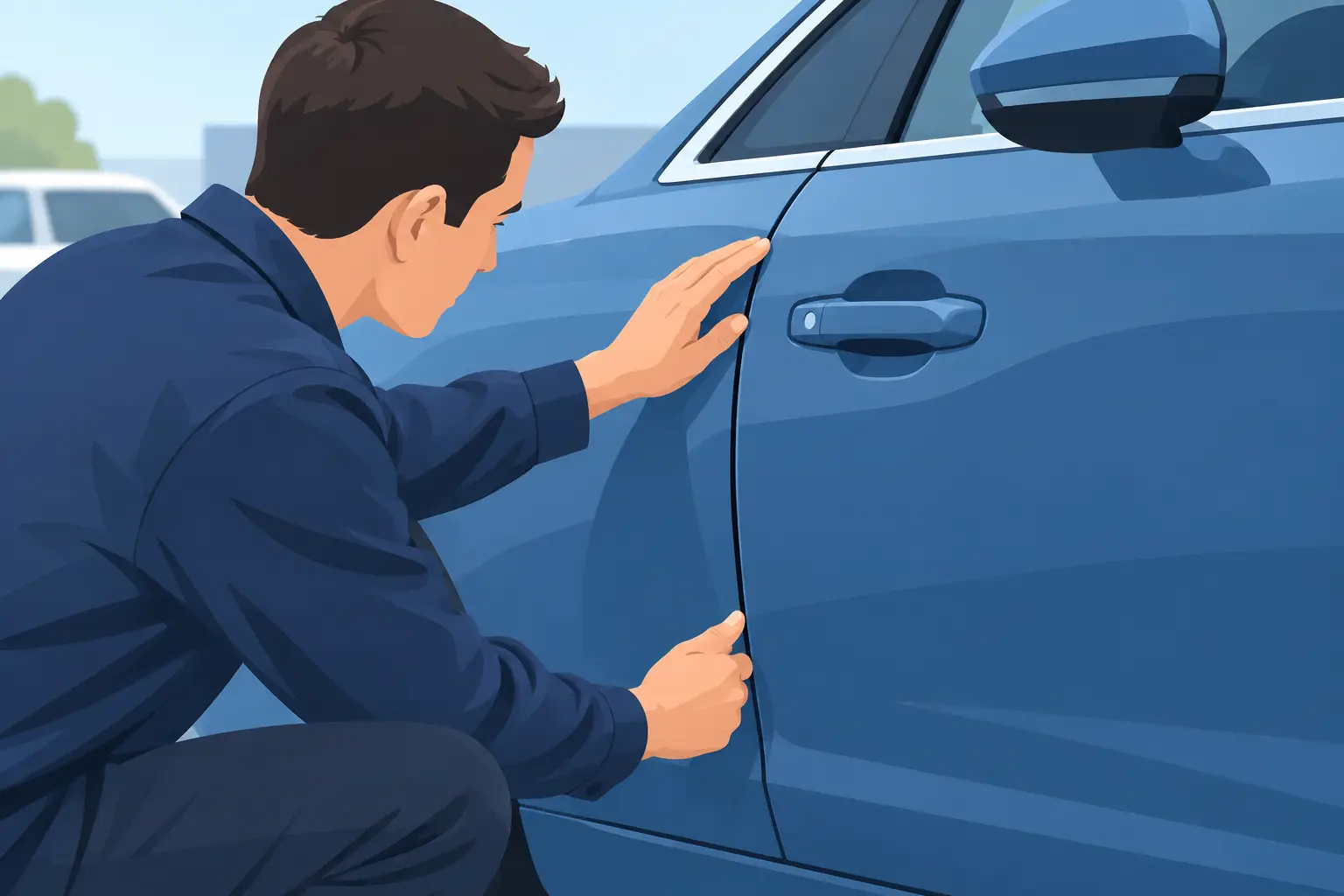
Look at the four main areas around the door: the front edge next to the fender, the rear edge next to the quarter panel or rear door, the top edge near the roofline, and the bottom edge near the rocker panel. The gap should generally remain even along each edge, without abrupt narrowing, widening, or contact between panels.
A gap that is tight at the top but wider at the bottom can suggest that the door has dropped, the hinges have moved, or a nearby panel is out of position. A gap that becomes narrow near one corner may point to impact damage around the fender, quarter panel, or door opening. If the edge of the door sits flush in one area but sticks out in another, do not assume it is only cosmetic.
Pay attention to these visible warning signs:
- One door gap is noticeably different from the same gap on the other side of the vehicle.
- The door edge rubs the fender, quarter panel, trim, or weatherstrip.
- The door sits proud of the body panel or appears pushed inward when closed.
- Paint is chipped, cracked, or freshly rubbed along a door edge or jamb.
- The body line running through the door no longer matches the line on the adjacent panel.
Small imperfections can come from prior repairs, normal wear, or factory tolerances. The key question is whether the gap changed after the incident or appears alongside other collision symptoms.
Check Body Lines, Not Just Empty Space
Modern vehicles use character lines, molding, trim, and crease lines to create a continuous appearance across the body. These lines are useful alignment clues. Follow a body line from the fender into the front door, then from the front door into the rear door or quarter panel. It should flow smoothly.
If a line appears to step up, dip down, or stop short at the door edge, the issue may involve more than the door itself. A shop may need to measure the surrounding panels and inspect mounting points before deciding what must be repaired or replaced.
Open and Close the Door Carefully
A visual check matters, but the way a door operates matters just as much. Open the door slowly and listen. It should move smoothly without scraping, popping, creaking, or dropping under its own weight. Then close it with normal pressure. Do not slam it repeatedly to force it into place.
A properly aligned door should latch securely without requiring a hard push, a lift, or a shoulder against the panel. If you must lift the door to make it latch, the hinges, striker, or door structure could be out of alignment. If it bounces back open, will not close fully, or needs excessive force, stop using that door as much as possible until it is inspected.
Check the door from inside and outside the vehicle. A door that seems acceptable from one side may reveal a poor latch fit or weatherstrip issue from the other. Also test the lock, handle, power window, and mirror controls if those components are located in the affected door. Collision damage can affect wiring and mechanisms that are not visible from the exterior.
Look at the Weatherstripping and Door Jamb
Inspect the rubber weatherstripping around the door opening. It should sit evenly and remain firmly attached. Torn, pinched, flattened, or displaced weatherstripping can lead to wind noise, water leaks, and reduced cabin comfort. It can also be a clue that the door is closing in the wrong position.
Look inside the door jamb for fresh scuffs, chipped paint, wrinkled metal, broken clips, or damaged trim. These are often clearer signs of contact than the exterior gap alone. After rain or a car wash, check for water on the sill, carpeting, or interior trim. A leak does not automatically mean structural damage, but it should be addressed before moisture causes odors, corrosion, or electrical trouble.
Know When Door Gaps May Signal a Bigger Problem
Not every uneven door gap means the vehicle is unsafe to drive. A minor bumper impact can shift a plastic cover or adjacent trim without affecting the vehicle’s main structure. Still, a collision can transfer force through areas that are not immediately obvious, particularly around the hinge pillar, roof rail, rocker panel, quarter panel, and frame or unibody structure.
Arrange a professional inspection promptly if the gap changed after a collision and the door will not latch properly, the vehicle has visible creases near the door opening, the roofline or rocker panel looks uneven, or airbags deployed. You should also have the vehicle checked if it pulls, vibrates, makes new wind noise, or shows warning lights after the impact.
Do not try to bend a door, move a striker, tighten hinges, or force a panel back into place at home. Modern doors contain side-impact reinforcement, wiring, sensors, window components, and often airbag-related equipment. An adjustment that appears simple can hide damage, create a poor seal, or affect how the door performs in a future crash.
What a Professional Door Alignment Inspection Includes
A qualified collision repair technician does more than compare gaps by eye. The inspection may include checking the hinges, latch and striker, door shell, glass operation, weatherseal contact, panel mounting points, and alignment of the fender, quarter panel, roof, and rocker area. Depending on the impact, the shop may use computerized measuring equipment to verify structural dimensions.
This process matters because correct panel gaps are not only about appearance. The door must open, latch, seal, protect occupants, and work with nearby safety systems as designed. A quality repair also includes proper paint preparation and color matching if refinishing is needed, so the repaired area looks consistent and remains protected from corrosion.
At Kings Auto Body Shop, certified technicians can inspect visible misalignment and underlying collision damage, explain what they find clearly, and provide a same-day estimate when possible. That gives busy Westfield-area drivers a practical next step instead of guessing whether a door that closes “well enough” is truly repaired.
If your door gaps look different after an accident, take a few clear photos before the vehicle is cleaned up or adjusted. Then have the vehicle evaluated while the evidence is still easy to see. A careful inspection now can protect the finish, comfort, and safety of the car your family depends on every day.