
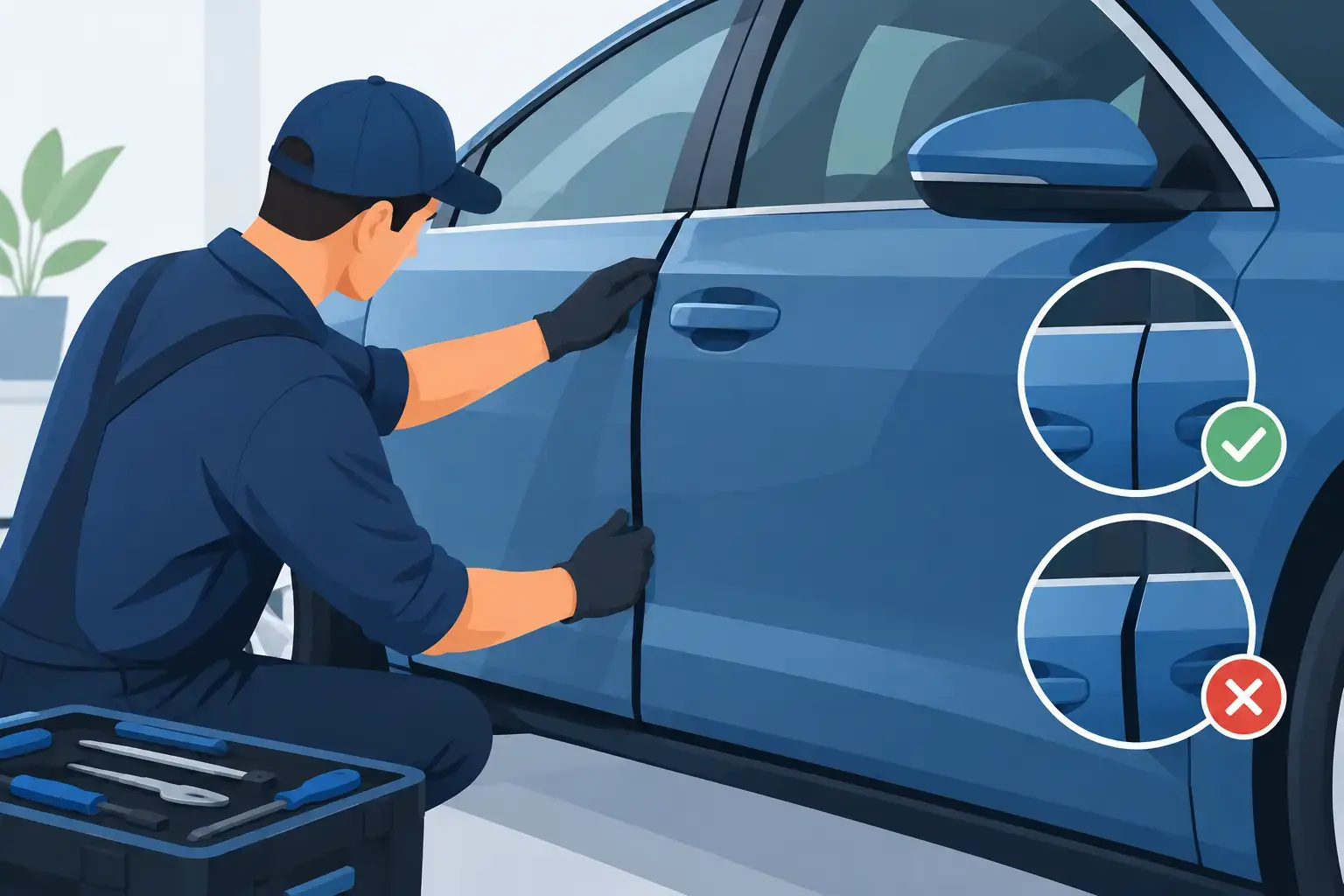
How to Realign Car Doors Without Missing Damage
A door that suddenly needs a hard slam, scrapes the fender, whistles at highway speed, or sits lower than the body line is more than an everyday annoyance. Knowing how to realign car doors can help you identify a simple hinge adjustment, but it can also reveal collision damage that should not be handled in a driveway.
Car doors are heavy, connected to safety systems, and designed to meet the body with very specific gaps. A few millimeters can affect latching, weather sealing, window operation, and side-impact protection. Before reaching for a wrench, take time to determine why the door moved in the first place.
Start by Checking What Is Actually Out of Alignment
Park on level ground and inspect the vehicle in good lighting. Open and close the door slowly without forcing it. Look at the gap around the top, bottom, front, and rear edges of the door. Factory gaps are not always perfectly identical, but they should look consistent and should not cause rubbing, chipping paint, or contact with nearby panels.
A door that hangs low often points to worn hinge pins, loose hinge bolts, or a door that was forced open by wind. If the door is too far inward or outward when closed, the striker on the body may be out of position. If the entire door opening appears distorted after an accident, the concern may be a bent hinge pillar, damaged rocker panel, or shifted frame structure.
Also check the latch before assuming the hinges are the problem. A latch that sticks, fails to release, or will not hold the door closed needs attention right away. Do not drive a vehicle with a door that may open unexpectedly.
Look for signs of collision damage
Paint cracks at the hinge area, wrinkled metal near the door opening, a bent fender edge, broken trim, or a door that suddenly contacts the quarter panel are warning signs. So are new wind noise, water leaks, a window that binds, and warning lights after a side impact.
These symptoms can mean the vehicle needs more than a door adjustment. Modern vehicles may have wiring for power locks, speakers, mirrors, side airbags, sensors, and cameras routed through the door area. A repair that looks simple from the outside may require structural measurements and proper recalibration.
How to Realign Car Doors With a Basic Hinge Adjustment
If there is no evidence of major impact damage and the door is only slightly low or uneven, a careful hinge adjustment may solve the issue. This work is usually a two-person job. One person supports the door while the other adjusts the bolts. Trying to hold a heavy door alone can damage the hinges, scratch the paint, or cause an injury.
First, protect the painted edges with automotive masking tape. Mark the current hinge position with a paint marker or fine marker line so you can always return to the starting point. Have the correct socket, ratchet, extension, and a sturdy padded support ready. Do not use a floor jack directly against the painted underside of the door.
Open the door enough to access the hinge bolts. Many vehicles have hinges bolted to the door, the body, or both. Loosen the bolts only slightly. The goal is to allow controlled movement, not to let the door shift freely.
Support the door from below, then move it in very small increments. Raising the door at the outer edge can help correct a low rear corner. Moving the hinge inward or outward can improve how flush the door sits against the body. Tighten the bolts, remove the support, and close the door gently to check the fit.
Repeat as needed, making adjustments one small change at a time. Large movements make it difficult to pinpoint what corrected the problem. Once the alignment is right, tighten the hinge bolts to the manufacturer’s specified torque. If you do not have the correct specification, professional service is the safer choice.
Do not force a sagging door upward
A common shortcut is lifting up hard on an open door to bend it back into place. Avoid it. That can bend hinge components, damage the check strap, crack paint, and create a worse fit than before. If the door has visible play when lifted, worn hinge pins or bushings may need replacement rather than adjustment.
Adjusting the Door Striker Carefully
The striker is the metal loop or pin on the body that the door latch grabs when the door closes. A misaligned striker can make a properly hung door appear out of alignment. You may notice that the door closes only when slammed, bounces back open, sits proud of the body, or drops slightly when it latches.
Mark the striker’s current location before touching it. Loosen its bolts just enough to make a very slight adjustment. Moving it up can help support a low-closing door. Moving it inward or outward changes how flush the door sits when latched.
Test the door after every small movement. It should close securely with a firm but normal push, remain flush with adjacent panels, and open easily from both inside and outside. Never adjust a striker so aggressively that the latch barely catches. A door that is difficult to close is not a door that has been properly repaired.
Check the Seal, Glass, and Electronics After Alignment
Correct panel gaps matter, but the job is not finished when the door looks straight. Run your hand along the weatherstrip and make sure it is seated evenly. Inspect it for tears, flattening, or sections pulled loose from the channel. A damaged seal can create wind noise and water intrusion even when the door alignment is correct.
Operate the window several times. Listen for rubbing, clicking, or slow movement. Test the power lock, interior handle, exterior handle, mirror controls, speakers, courtesy lights, and child safety lock if equipped. If the door was involved in an accident, check for dashboard warnings related to airbags or safety systems.
A quick water test can help identify a sealing issue. With the windows closed, lightly run water over the door and inspect the interior edge for moisture. Avoid high-pressure spraying directly at seals, since that can force water past areas that would normally perform properly in rain.
When a Professional Repair Is the Right Call
DIY adjustments can be reasonable for a minor sag or a striker that has moved slightly. They are not the answer for every misaligned door. Schedule a professional inspection when the door was damaged in a collision, the body opening looks uneven, the hinges are bent, the latch does not engage reliably, or paint is cracked around structural areas.
Professional auto body technicians use measuring equipment, dedicated supports, manufacturer repair procedures, and calibrated tools to identify whether the problem is limited to the door or extends into the vehicle’s structure. That distinction matters. Forcing a new door to fit a damaged opening can hide the cause while leaving safety, sealing, and future repair problems behind.
At Kings Auto Body Shop, certified technicians can inspect door alignment, hinges, latches, surrounding panels, and collision-related structural concerns before recommending the right repair. A clear estimate helps you understand whether the fix is a straightforward adjustment, hinge repair, door replacement, or more extensive body work.
Protect Your Vehicle After the Repair
Once the door closes evenly and latches correctly, inspect it again after several days of normal driving. Watch for fresh paint rub marks, loosened bolts, wind noise, or a door that starts dropping again. These clues can point to worn hardware or underlying damage that was not obvious during the initial adjustment.
If your door changed position after a parking-lot impact, a fender bender, or a hard gust of wind, do not wait for the problem to worsen. A properly aligned door protects the finish, keeps weather out, and helps your vehicle feel safe and solid every time you drive. Get it checked early, and restore your vehicle’s condition with a repair that is built to last.