
Auto Glass Damage Types and When to Repair Them
A tiny chip can look harmless in the morning and become a long windshield crack by the end of a New Jersey commute. Temperature swings, road vibration, potholes, and a running defroster all put stress on already damaged glass. Knowing the most common auto glass damage types helps you act before a quick repair turns into a larger replacement and a bigger disruption to your day.
Your windshield is not just there to block wind and rain. It supports the roof in a rollover, helps airbags deploy as designed in many vehicles, and gives cameras and safety sensors a clear view of the road. The right decision depends on the damage pattern, size, location, depth, and the type of vehicle you drive.
Common Auto Glass Damage Types
Rock chips and bull’s-eyes
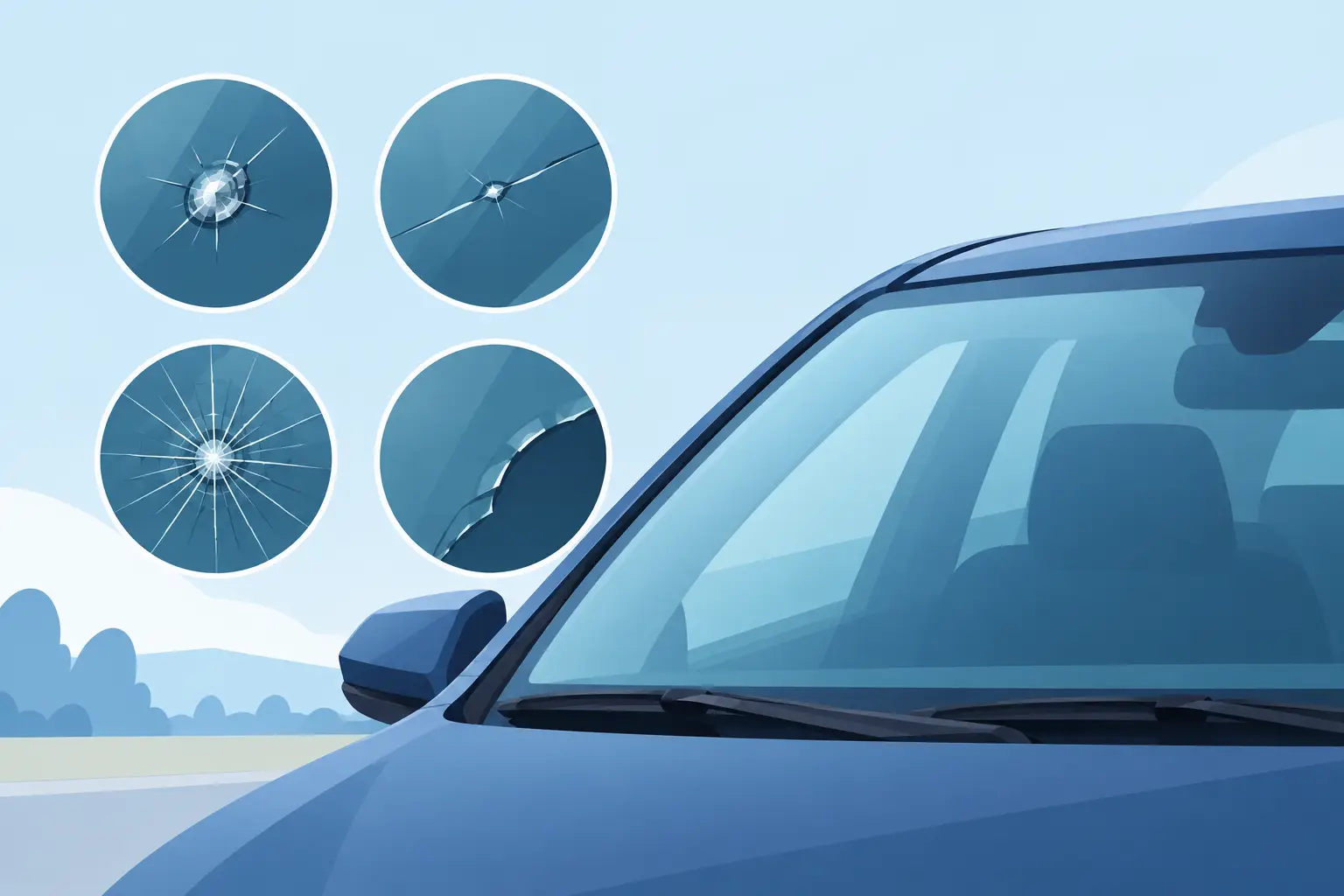
A rock chip happens when a stone, road debris, or loose material strikes the windshield. The impact usually leaves a small crater where a piece of glass has been removed. A bull’s-eye is a round chip with a cone-shaped break beneath the surface, often resembling a small target.
These are among the most repairable forms of windshield damage when addressed quickly. Dirt and moisture can work their way into the break, making a clean repair more difficult. If the chip is small, not directly in the driver’s primary viewing area, and has not spread, a technician may be able to inject specialized resin to stabilize it and improve clarity.
Star breaks
Star breaks have short cracks radiating outward from a central impact point. They commonly occur after a hard hit from gravel or debris at highway speed. The rays may be small at first, but each one creates a path for the crack to travel farther across the windshield.
A contained star break can sometimes be repaired, particularly when it is recent. Waiting is risky. A warm afternoon, a cold night, or a sharp bump on a local road can turn those short legs into a crack that reaches the edge of the glass.
Combination breaks
Combination breaks include more than one damage pattern, such as a bull’s-eye surrounded by star-shaped cracks. They can be harder to repair because the damaged area has several directions in which it can spread.
Repair may still be possible if the damage is limited and away from important viewing or sensor areas. However, a larger combination break often calls for replacement because the glass may not regain the strength and clear visibility needed for safe driving.
Cracks: edge, stress, and floater cracks
Windshield cracks are not all the same. An edge crack starts within a few inches of the windshield’s outer border. This area carries more structural stress, so edge cracks tend to spread quickly and are more likely to require replacement.
A stress crack may appear without an obvious impact point. It can result from rapid temperature changes, body flex after a collision, improper installation, or pressure on the glass. A floater crack begins away from the edge and may be caused by a direct strike or internal stress.
Crack length matters, but so does the cause. If a crack appeared after a collision, the vehicle should be inspected for surrounding body, frame, or mounting damage. Replacing glass without correcting the issue behind it can lead to repeated problems.
Surface scratches and pitting
Fine scratches can come from worn wiper blades, trapped grit, an ice scraper, or improper cleaning. Pitting is a field of tiny impact marks created over time by sand, road debris, and highway driving. Both can scatter light and create glare, especially when driving toward the sun or through rain at night.
Light surface damage may be improved with professional polishing, depending on the glass and the depth of the marks. Deep scratches should not be aggressively polished because removing too much material can distort the glass. When visibility is affected, replacement is often the safer answer.
Side-window and rear-window damage
Side and rear windows are typically made from tempered glass, unlike the laminated construction of most windshields. When tempered glass breaks, it usually shatters into many small pieces rather than holding together in a cracked sheet.
That means a cracked door glass or shattered back window is generally not repaired. It needs replacement, cleanup of broken glass, and an inspection of the window regulator, seals, defroster connections, and surrounding trim. Covering the opening with plastic may keep out some weather temporarily, but it is not a secure or long-term repair.
Repair or Replacement: What Determines the Right Fix?
The best option is not based on appearance alone. A small chip in the wrong location can be less suitable for repair than a larger chip away from the driver’s view. Certified technicians consider the full condition of the glass before recommending a solution.
Repair is often possible when damage is small, shallow, recent, and limited to the outer layer of a laminated windshield. The damaged area should not be directly in the driver’s main line of sight, close to the windshield edge, or obstructing cameras and sensors. A repair strengthens the affected area and helps stop the damage from spreading, but it may leave a faint visual mark.
Replacement is usually the better choice for long cracks, deep damage, multiple break points, edge damage, shattered side or rear glass, or damage that affects visibility. It is also necessary when the inner layer is damaged or when the windshield’s safety role may be compromised.
Modern vehicles add another important factor: advanced driver-assistance systems. If your windshield supports a forward-facing camera for lane departure warnings, automatic emergency braking, adaptive cruise features, or traffic-sign recognition, replacement may require camera calibration afterward. This is not an optional extra. The camera must be correctly aligned so the system can interpret distance, lanes, and hazards properly.
What to Do Right After Glass Damage
Do not slam doors, blast the defroster directly onto a cold cracked windshield, or pour hot water on icy damaged glass. Sudden pressure and temperature changes can make a chip or crack spread immediately.
Keep the area as dry and clean as possible. If it is safe to do so, placing clear tape over a small chip can help keep out dirt and moisture until it can be inspected. Avoid pressing on the glass or trying a do-it-yourself repair kit if the damage is near sensors, in your viewing area, or already spreading.
For broken side or rear glass, remove loose pieces only if you can do it safely, protect the interior from rain, and arrange service promptly. Broken glass creates a security issue as well as a weather problem. If the vehicle is not safe to drive, towing is the smart choice.
Why Fast Inspection Saves Time and Money
Auto glass damage rarely improves on its own. A repair completed early may save the original windshield, while a delay can allow the same small chip to become a replacement job. That difference matters when you rely on your vehicle for school drop-offs, work commutes, errands, and weekend travel.
Insurance coverage can also vary by policy and damage type. A professional estimate gives you a clear view of what the repair involves before work begins. If glass damage followed a collision, the inspection should also account for dents, paint damage, bumper alignment, roofline damage, and any signs of structural stress around the opening.
At Kings Auto Body Shop, our team looks beyond the visible crack or chip to help make sure the surrounding vehicle condition is addressed with the same care. You deserve honest guidance, quality parts and installation, and a vehicle that feels safe when you get back behind the wheel.
A clear windshield is one of the simplest ways to protect every mile ahead. If you notice a chip, crack, haze, or shattered window, schedule an inspection before the next temperature change or road bump makes the decision for you.