Collision Repair Timelines: What Delays a Fix?
A damaged bumper, cracked headlight, or bent frame can disrupt far more than your vehicle’s appearance. You still need to get to work, pick up the kids, and handle everyday errands. That is why collision repair timelines matter so much after an accident. The honest answer is that every repair is different, but a professional auto body shop should explain what is happening, what comes next, and what could affect the completion date.
At Kings Auto Body Shop, the goal is to move each repair forward quickly without rushing the work that protects your safety, vehicle value, and finish quality. Here is what New Jersey drivers should expect from the repair process.
What Determines Collision Repair Timelines?
The severity and location of damage are the biggest factors. A small dent in a door may be repaired in a day or two when paintless dent repair is appropriate. A bumper with hidden damage behind it, however, can require disassembly, replacement parts, sensor calibration, refinishing, and quality checks.
Major collisions take longer because modern vehicles are built with carefully engineered crumple zones, safety systems, cameras, radar sensors, airbags, and structural components. Damage that looks minor from the outside can sometimes extend to brackets, mounting points, suspension parts, cooling components, or the vehicle frame. A proper inspection is not a delay for its own sake. It is how technicians make sure the car is safe to drive again.
The vehicle’s make, model, and age also affect timing. Common parts for a popular vehicle may be available quickly. Specialty trim, advanced driver-assistance components, imported parts, and parts for older models may require more time to locate or ship. A dependable shop will not guess about availability. It will check the parts situation early and keep you updated if a supplier changes the expected delivery date.
A Realistic Repair Process, Step by Step
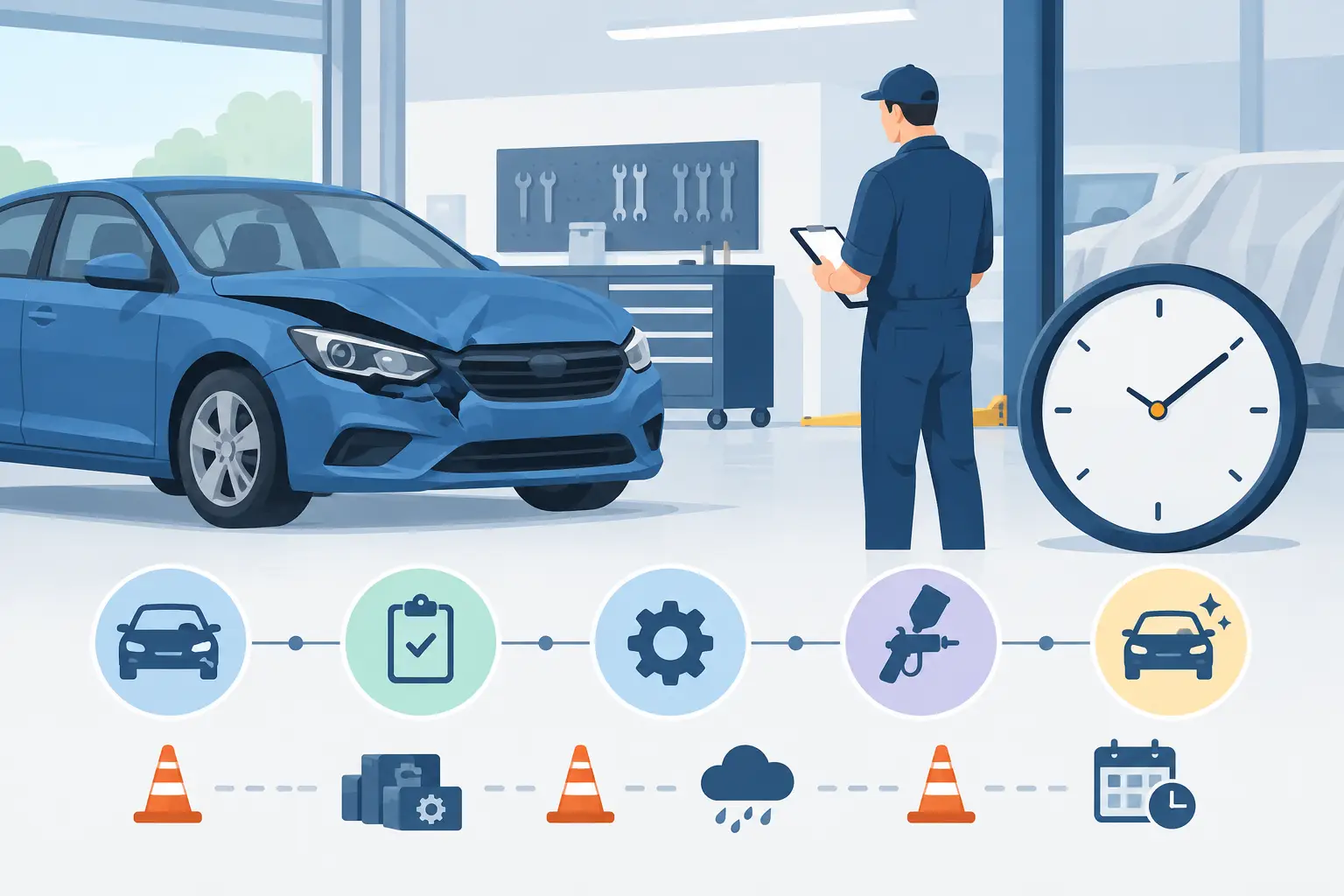
Estimate and damage inspection
The process begins with a thorough estimate. For visible damage, a same-day estimate can often give you a clear starting point. The estimator documents damage, reviews repair options, and identifies parts that may need replacement.
Still, the first estimate is sometimes only the beginning. Technicians cannot see every damaged component until they remove the bumper cover, fender, wheel, trim, or other affected panels. This deeper inspection is called teardown. It is one of the most important steps because it prevents a shop from repairing only what is visible while missing damage underneath.
Insurance review and approval
If you are filing an insurance claim, approval can influence the schedule. Your insurer may need photos, an estimate, adjuster review, or additional documentation before authorizing repairs. If teardown reveals additional damage, the shop submits a supplement explaining the newly found repair needs and related costs.
Supplements are common after an accident, especially when there is hidden damage. They can add time, but they are also a sign that the repair is being handled correctly. Replacing or repairing a damaged component without proper authorization can create billing problems later. Clear communication between the shop, customer, and insurer helps prevent unnecessary back-and-forth.
You have the right to choose the repair facility you trust. A shop that works with all insurance companies can help make the paperwork and communication less stressful, while keeping the focus where it belongs: restoring your vehicle properly.
Parts ordering and delivery
Once the repair plan is approved, needed parts are ordered. This can include a bumper reinforcement, headlight, grille, mirror, glass, suspension component, radiator support, door shell, sensor, molding, or factory hardware. A simple repair can move quickly when all parts arrive on time.
Parts availability is one of the most common reasons an estimated completion date changes. A shop may receive most of the order promptly but need to wait for one critical component before reassembly can be completed. There is a trade-off here. Installing an incorrect, low-quality, or poorly fitting part just to finish faster can affect panel alignment, paint appearance, safety systems, and long-term durability. The right part is worth the wait.
Structural and mechanical repair
For heavier damage, technicians repair the vehicle’s foundation before addressing cosmetic panels. This may include frame straightening, measuring structural points, correcting suspension damage, replacing brackets, or repairing mechanical systems affected by the collision.
This stage cannot be rushed. Accurate structural work helps doors, hoods, bumpers, lights, and safety components fit and function as intended. It also gives paint and body technicians a sound starting point for the next phase. A vehicle that looks good but tracks poorly, has uneven panel gaps, or does not protect occupants correctly is not truly repaired.
Bodywork, paint, and refinishing
Body repair and paint are where patience shows. Technicians repair dents, prepare surfaces, apply primer, match color, spray basecoat and clearcoat, and allow each product to cure according to manufacturer requirements. Weather, humidity, panel material, and the extent of blending into adjacent panels can affect the process.
Color matching is especially important on metallic, pearl, tri-coat, and older paint finishes. Paint may need to be blended into nearby panels so the repaired area does not stand out in sunlight. This can add time compared with a basic spot repair, but it produces a more natural, polished result.
Reassembly, calibration, and final quality control
The last stage is more than reinstalling parts. The team reassembles the vehicle, checks panel alignment, verifies lights and functions, and inspects the finish. If the collision affected cameras, blind-spot monitors, parking sensors, radar, or other driver-assistance features, calibration may be necessary.
A final quality inspection protects you from driving away with a loose molding, warning light, imperfect paint edge, or system that needs further attention. It is the final step before the shop returns the vehicle clean, presentable, and ready for the road.
Typical Timelines for Common Auto Body Repairs
Minor cosmetic repairs, such as small dents, scratches, bumper scuffs, or headlight restoration, may take one to three business days when no hidden damage or specialty parts are involved. A damaged bumper, fender, door, or replacement glass often takes several days to a week, depending on parts, paint, and insurance approval.
Moderate collision repairs involving multiple panels, a damaged headlight assembly, suspension work, or sensor calibration may require one to three weeks. Heavy collision restoration with structural damage, extensive parts replacement, mechanical repairs, and significant refinishing can take several weeks or longer.
These ranges are not promises because the details matter. A three-day estimate can change if teardown reveals a bent bracket or delayed sensor. On the other hand, a larger repair may progress efficiently when parts are in stock, insurance approval is prompt, and the vehicle does not need additional structural work. The best timeline is an informed one, not an overly optimistic one.
How to Help Keep Your Repair Moving
You can make the process easier by starting the claim promptly, providing the claim number and insurer contact information, and responding quickly if your shop or insurer has a question. Remove personal belongings from the vehicle before drop-off, and let the shop know about any existing warning lights, prior damage, or mechanical concerns.
Ask for updates at key points: after teardown, when parts are ordered or received, when paint begins, and when final assembly is underway. A trustworthy shop should be comfortable explaining the status in plain language. You deserve to know whether the vehicle is waiting on approval, a part, paint cure time, or a final inspection.
If your car is not safe to drive after an accident, do not take chances. Arrange towing to the repair facility rather than risking more damage or putting yourself and others in danger.
Fast Repairs Should Still Be Complete Repairs
Everyone wants their car back quickly. For commuters and busy families in Westfield, Elizabeth, Newark, and surrounding New Jersey communities, being without a vehicle is frustrating. But speed should never mean skipping measurements, accepting poor color matching, ignoring an alignment concern, or sending you out with an uncalibrated safety system.
The right collision repair timeline balances urgency with careful work. Choose a shop that gives you a clear estimate, explains changes honestly, uses the right repair methods, and stands behind the finished vehicle. A few extra days spent repairing your car correctly can protect your safety, preserve its appearance, and give you confidence every time you get behind the wheel.