
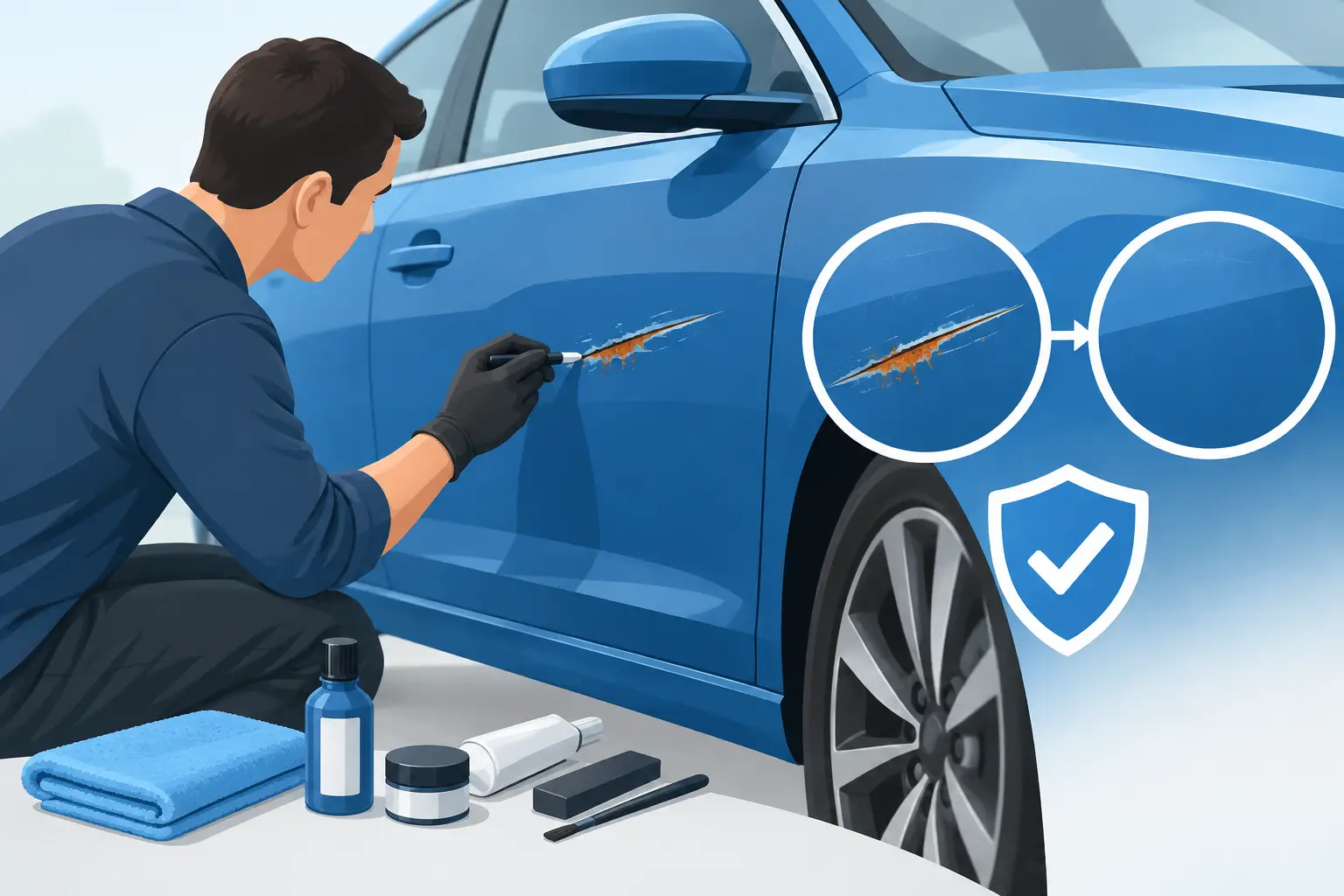
How to Prevent Rust After Scratches on Your Car
A scratch may look minor in the parking lot, but it can become a much larger repair if water reaches exposed metal. Knowing how to prevent rust after scratches helps protect your vehicle’s finish, resale value, and long-term condition. The key is simple: inspect the damage early, keep the area clean and dry, and seal it correctly before New Jersey rain, road salt, or humidity gets underneath the paint.
Why Scratches Can Turn Into Rust
Your vehicle’s paint is more than a cosmetic finish. It is a protective system made up of clear coat, color coat, primer, and metal protection beneath it. When a scratch cuts through those layers, it can expose bare steel or damage the primer that keeps moisture away from the body panel.
Rust begins when metal, oxygen, and moisture meet. A few drops of rain may not create visible corrosion overnight, but repeated exposure can start oxidation below the surface. Once rust gets under surrounding paint, it can spread farther than the original scratch. What began as a thin line from a shopping cart or brush against a garage wall can eventually lead to bubbling paint, flaking edges, and weakened metal.
This is especially relevant for drivers in Westfield and throughout New Jersey. Winter road salt, slush, wet leaves, and humid summer weather all create conditions that allow corrosion to develop faster.
Check How Deep the Scratch Really Is
Before choosing a repair method, look closely at the scratch in good daylight. The depth matters more than its length.
A light mark that appears white or dull but does not catch your fingernail is often in the clear coat. It may be removable with proper polishing. If you see the vehicle’s color but feel the mark with a fingernail, the scratch may have reached the color coat and need touch-up paint or professional refinishing.
Gray, black, silver, or bare metal at the bottom of a scratch is a stronger warning sign. That means the protective paint layers may be gone. You should address it promptly, even if the damaged spot is small. Deep scratches near wheel wells, rocker panels, door bottoms, bumpers, hood edges, and trunk seams deserve extra attention because those areas collect water, dirt, and salt.
Plastic bumper covers do not rust, but scratches in a bumper can still expose surrounding brackets, fasteners, reinforcement components, or nearby metal panels to moisture. A cracked or loose bumper should be inspected for more than appearance alone.
Clean the Area Before You Repair It
Never apply wax, touch-up paint, or a temporary coating over a dirty scratch. Dirt can trap moisture and prevent the repair material from bonding correctly.
Wash the damaged area with automotive soap and clean water, then dry it completely with a clean microfiber towel. Avoid using household cleaners, rough paper towels, or abrasive pads. They can damage the clear coat around the scratch and make a small repair area larger.
After washing, look for orange or brown discoloration. If you see even a small amount of rust, do not simply paint over it. Surface corrosion needs to be removed and the area properly prepared before it can be sealed. Covering active rust may make the spot look better briefly, but corrosion can continue under the new paint.
If the scratch occurred after a collision, scrape, or impact that also dented the panel, do not assume it is only a paint issue. A dent can crack paint around its edges, create hidden damage, or affect panel alignment. A professional inspection is the safer choice when the body panel is bent, creased, loose, or damaged near a door, hood, trunk, or safety component.
How to Prevent Rust After Scratches With a Quick Repair
For a very small scratch that has not begun to rust, a correctly matched touch-up product can provide temporary or long-lasting protection, depending on the depth and quality of the application. Start by confirming your vehicle’s paint code, usually found on a label inside the driver-side door jamb, under the hood, or in the owner’s manual.
Apply touch-up paint carefully in thin layers rather than adding one thick drop. Thick paint tends to sit above the surface, dry unevenly, and collect dirt along the edges. Let each layer dry according to the product instructions. If the scratch exposed bare metal, use a product designed to restore the protective barrier, not just add color.
For shallow clear-coat marks, a quality automotive polish may reduce or remove the visible line. This only works when the damage has not gone through the clear coat. Aggressive rubbing compounds and drill-mounted polishing tools can burn through paint if used incorrectly, so they are not the right first move for every driver.
After the repair has fully cured, apply wax or a paint sealant to the surrounding painted area. Wax is not a replacement for paint or primer, but it can add another layer of water resistance to intact paint.
Do Not Rely on Temporary Fixes for Deep Damage
Clear nail polish, marker pens, tape, and random spray paint are common quick fixes, but they can create problems later. Nail polish may discolor, crack, or react poorly with automotive finishes. Markers do not create a dependable moisture barrier. Tape holds water and dirt against the panel, especially after rain or a car wash.
Off-the-shelf spray paint can work for limited applications when preparation and color match are handled properly, but it is difficult to achieve a durable finish without the right materials, sanding process, primer, and controlled spray technique. A mismatched patch may stand out in sunlight, and poor prep can allow rust to return underneath it.
The trade-off is straightforward: a do-it-yourself touch-up can be reasonable for a tiny, clean scratch on an older vehicle, while a newer car, leased vehicle, premium finish, or deeper scratch usually benefits from professional repair. Correct color matching and refinishing protect both the panel and the vehicle’s appearance.
Watch for Signs That Rust Is Starting
Rust is easier and less expensive to manage when caught at the surface. Check repaired scratches periodically, especially after winter or several weeks of wet weather. Look for small orange dots, bubbling paint, lifting edges, a rough texture, or a dark stain that appears to grow after washing.
Pay attention to areas you may not see every day. Open the doors and trunk, inspect the lower body panels, and look behind the wheel openings. If rust is forming around a scratch near a seam, trim piece, or molding, moisture may be getting behind the panel edge. That type of corrosion should be professionally evaluated before it spreads.
A scratch on aluminum does not develop red rust in the same way steel does, but it can still corrode and compromise the finish. Modern vehicles also use different materials across their body panels, so guessing based on appearance can lead to the wrong repair approach.
Protect Your Paint From the Next Scratch
No vehicle can avoid every road hazard, but regular care reduces the chance that a small scratch becomes a corrosion problem. Wash off salt and grime promptly during winter. Keep mud and wet debris from building up behind wheel wells. Park with enough room from shopping carts, tight garage walls, and other vehicles whenever possible.
Paint protection film, ceramic coatings, and regular wax each offer different levels of protection. Film can help guard high-impact areas such as bumper edges, hood fronts, and door cups. Coatings and waxes improve water beading and make cleaning easier, but they will not stop a sharp object from cutting through paint. Think of them as added protection, not armor.
If a scratch comes with a dent, paint chip, cracked bumper, or collision damage, bring the vehicle in before weather makes it worse. At Kings Auto Body Shop, certified technicians can inspect the damage, explain what is needed, and restore the panel with proper preparation, color matching, and refinishing.
A fast inspection after a scratch can save you from chasing rust months later. Protect the exposed area now, and your vehicle will stay safer, cleaner, and better prepared for the miles ahead.