Car Paint Color Matching That Looks Factory-Fresh
A bumper corner can be repaired perfectly and still look wrong from ten feet away if the color does not match. That is why car paint color matching is about much more than finding a paint code and spraying one panel. A proper repair has to account for your vehicle’s exact finish, the way its paint has aged, and how light changes what your eye sees.
For drivers in Westfield and throughout central and northern New Jersey, a good color match means your vehicle comes back looking like itself again – not like it has a freshly painted patch after a minor collision. Whether the damage is a scraped bumper, a dented door, or a larger collision repair, the goal is a durable finish that blends naturally with the surrounding panels.
Why Car Paint Color Matching Is Not One-Size-Fits-All
Every vehicle leaves the factory with a paint code, usually found on a label inside the driver-side door jamb, under the hood, or in another manufacturer-designated location. That code gives a repair shop the starting formula. It does not always provide a perfect final answer.
Automakers may use several approved formula variants under the same color code. A white vehicle can lean slightly warmer, cooler, brighter, or grayer depending on its production batch. Metallic silver, pearl white, deep black, red, blue, and gray finishes can be even more demanding because the size and direction of the metallic or pearl particles affect how the panel reflects light.
Time also changes paint. Sun exposure, weather, road salt, washing habits, and everyday wear can gradually alter the appearance of a vehicle’s finish. The original factory formula may be technically correct but appear too dark, too clean, or too vibrant next to paint that has been on the vehicle for years.
That is why experienced technicians do not rely only on the code. They compare the color directly to the vehicle, create test panels when needed, and adjust the formula before refinishing the damaged area.
How Professional Color Matching Works
Quality paint work starts with preparation. Before a technician thinks about clear coat or polishing, the repaired surface must be straight, clean, stable, and properly primed. A smooth panel gives paint an even foundation. If the bodywork underneath is rushed, the final finish can reveal waves, sanding marks, or uneven reflections even when the color itself is close.
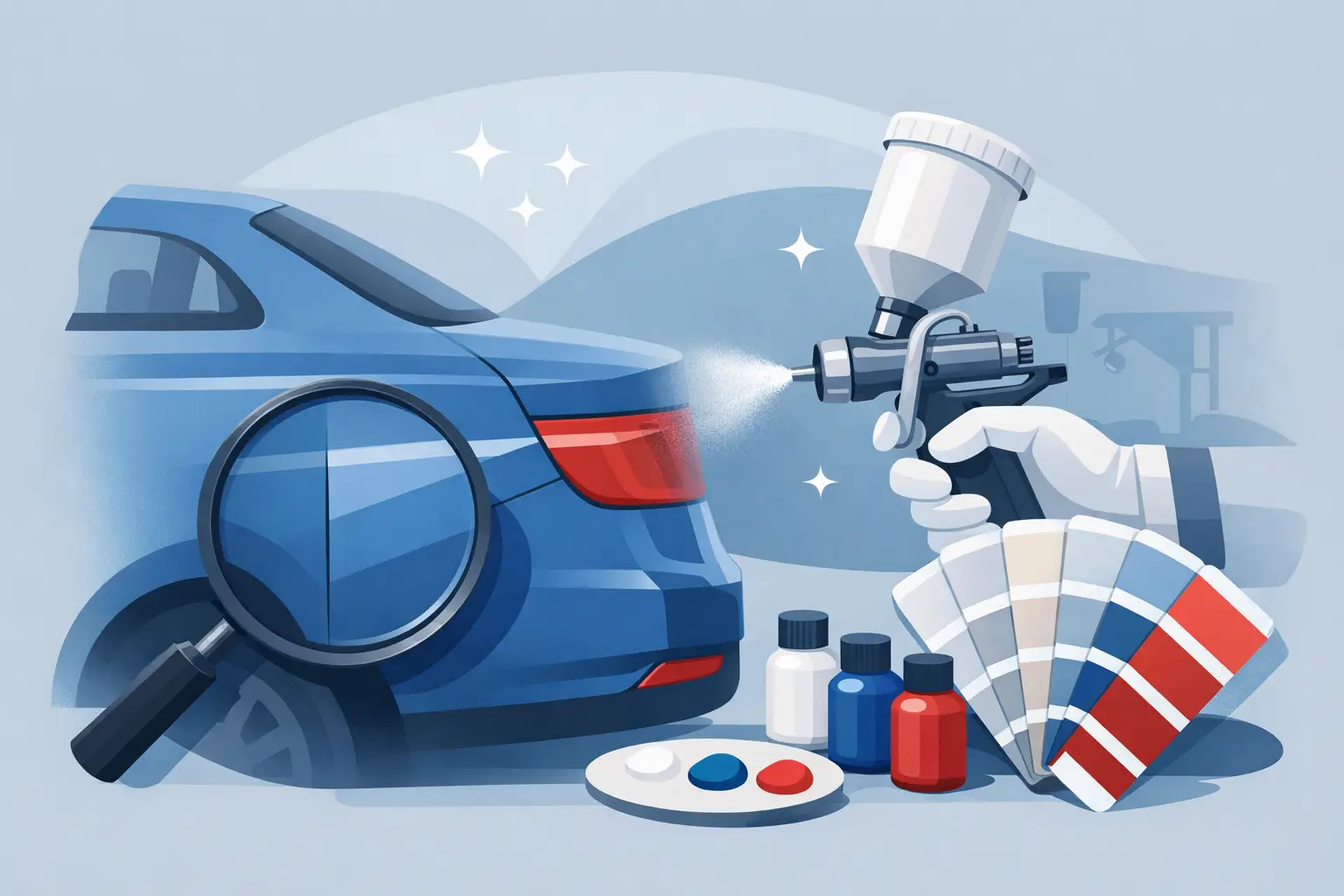
The next step is identifying the vehicle’s original color information and reading the existing finish. Certified technicians use manufacturer color data and advanced color-matching tools to analyze the panel. A digital color camera or spectrophotometer can measure the finish from several angles, helping the technician select the closest formula variant and determine whether adjustments are required.
Then comes the human part of the process. Paint professionals inspect color under different lighting conditions, because a match that appears excellent inside a shop may look different outdoors. Daylight, shade, garage lighting, and parking-lot lights can each bring out subtle differences in hue, metallic flop, or pearl effect.
After the color is approved, the technician applies it with controlled spray technique. Gun pressure, spray distance, panel temperature, humidity, and the number of coats all influence the result. This is especially true with metallic colors, where inconsistent application can leave a striped, cloudy, or patchy appearance.
Why Blending Nearby Panels Makes a Difference
Many drivers expect a shop to repaint only the damaged panel. Sometimes that is possible. In other cases, blending the color into the adjacent panel is the best way to make the repair disappear.
Blending means gradually feathering the new color into an undamaged neighboring panel rather than stopping at a hard body line. For example, a repair on the front edge of a door may require color to be blended into the rear door or fender. The clear coat is then applied according to the repair plan to create a uniform gloss and durable protection.
This approach can sound like additional work, but it often prevents the visible “panel effect” that happens when a newly painted area is slightly different from the older finish beside it. It is particularly valuable on colors that shift dramatically in sunlight, including tri-coat pearl whites, metallic grays, silvers, and many modern blues and reds.
Blending is not automatically needed for every repair. The right choice depends on the color, the size and location of the damage, the vehicle’s age, and how much the existing paint has weathered. A trustworthy auto body shop should explain why blending is or is not recommended before work begins.
Common Reasons a Paint Match Can Look Off
Color mismatch is not always caused by poor paint. Often, it comes from a process that skipped key steps or treated a complex finish like a simple one. The most common issues include:
- Using the factory paint code without checking for color variants or paint aging.
- Skipping adjacent-panel blending when the repair needs it.
- Applying metallic or pearl paint unevenly.
- Painting over inadequate bodywork, primer, or surface preparation.
- Using low-quality materials or rushing the curing process.
Clear coat can also change what you see. The same base color may look different under a clear coat with a different gloss level or texture. Once the finish cures, professional polishing can refine the surface and bring the repaired area closer to the surrounding paint’s clarity and shine.
What to Expect After a Collision or Paint Damage
If your vehicle has paint damage after a fender bender, parking-lot scrape, or more serious collision, do not judge the repair only by the first estimate. Ask how the shop plans to match the color and whether blending may be needed. You deserve a clear explanation, especially if insurance is involved.
A complete estimate should identify visible repair work and note that additional damage can be found after disassembly. In some cases, a bumper cover may look like it only needs paint but have broken retainers, hidden impact damage, or misalignment that must be corrected first. Restoring the panel’s fit and function is just as important as restoring its appearance.
Insurance companies commonly work with professional collision shops on color matching and refinishing procedures. The key is to choose a repair facility that documents the work, communicates clearly, and focuses on returning the vehicle to a safe, presentable condition rather than simply completing the fastest possible paint job.
At Kings Auto Body Shop, technicians approach refinishing as part of the full repair process – from correcting collision damage and panel alignment to matching color, applying durable coatings, and inspecting the final finish. That attention helps customers avoid the frustration of seeing a repair every time they walk up to their car.
Protecting a Newly Painted Finish
Fresh paint needs time to fully cure. Your repair professional will provide specific care instructions based on the products used and the conditions at the time of repair. In general, avoid harsh chemicals, abrasive polishing, and automatic car washes with aggressive brushes immediately after pickup.
Hand washing with a gentle automotive soap is usually the safer option once the shop says washing is appropriate. Keep bird droppings, tree sap, and road grime from sitting on the finish for long periods, since these contaminants can stain or dull paint. If you park outside often, regular washing and a quality protective product can help preserve gloss and make future cleaning easier.
It is also smart to inspect the repair in daylight when you pick up the vehicle. Look from several angles, not just straight on. A professional shop welcomes that conversation and will address any questions about panel fit, gloss, color transition, or aftercare.
A color match should not make your vehicle look newly repaired. It should let the repair fade into the rest of the car, so you can get back to commuting, school drop-offs, errands, and weekend plans with confidence. If damaged paint is distracting you every time you see your vehicle, schedule a free estimate and get a clear plan for restoring its finish the right way.