Car Repainting After an Accident Done Right
A collision can leave behind more than a dented panel. Even a small scrape through the finish can expose metal, compromise the vehicle’s appearance, and make a once-simple repair feel much bigger than it is. Car repainting after accident damage is not just about making a vehicle look good again. Done correctly, it protects the repaired area, helps prevent corrosion, and restores a finish that belongs on the rest of the car.
For drivers in Westfield and throughout North and Central New Jersey, the goal is usually straightforward: get the car back safely, quickly, and without obvious evidence of the accident. That result depends on far more than spraying paint over damaged bodywork.
Why Accident Paint Damage Needs Proper Repair
Modern vehicle paint is a layered protective system. Beneath the clear, glossy surface are color coats, primers, sealers, and the panel itself. When an accident cracks, chips, gouges, or tears through those layers, moisture and road salt can reach exposed metal. Over time, that can lead to rust, bubbling paint, and a repair that costs more than it would have at the start.
Paint damage can also reveal a larger problem. A bumper that looks scuffed may have broken mounting tabs underneath. A door with a crease may need dent removal and panel shaping before any refinishing begins. On a newer vehicle, sensors, cameras, trim pieces, and specialized materials may affect how the repair is completed.
That is why a quality auto body inspection comes before the paint booth. The visible scratch matters, but so does the condition of the panel, bumper, frame area, and components behind it.
What Professional Car Repainting After an Accident Includes
A lasting repaint is built on preparation. The actual paint application is only one stage of the work, and it cannot correct poor body repair underneath.
Damage inspection and repair planning
A technician first examines the impact area and checks for related damage. This may include dents, loose bumper covers, cracked plastic, damaged molding, broken lights, or misalignment around doors, hoods, and trunk lids. If the collision was more serious, the shop may also inspect structural and mechanical areas before cosmetic repairs move forward.
The repair plan should explain whether the panel can be repaired, whether a part needs replacement, and what refinishing work is necessary. A free same-day estimate can give you a clear starting point, although hidden damage sometimes becomes visible only after parts are removed.
Panel preparation and surface correction
Before paint is applied, the damaged surface must be cleaned, sanded, repaired, and leveled. Depending on the damage, this can involve dent removal, body filler applied in thin controlled layers, primer, sanding, and sealing. Any rust or damaged material needs to be addressed rather than covered.
This stage determines whether the panel will look smooth in direct sunlight. A quick paint job may hide a scratch for a while, but waves, pinholes, rough edges, and shrinking filler often show up later. Proper prep takes time because the finish is only as good as the surface beneath it.
Accurate color matching
A paint code is helpful, but it is not the whole answer. Sun exposure, age, previous repairs, and normal manufacturing variation can make the same factory color look slightly different from one vehicle to another. White, silver, gray, pearl finishes, metallic colors, and tri-coat paints can be especially demanding.
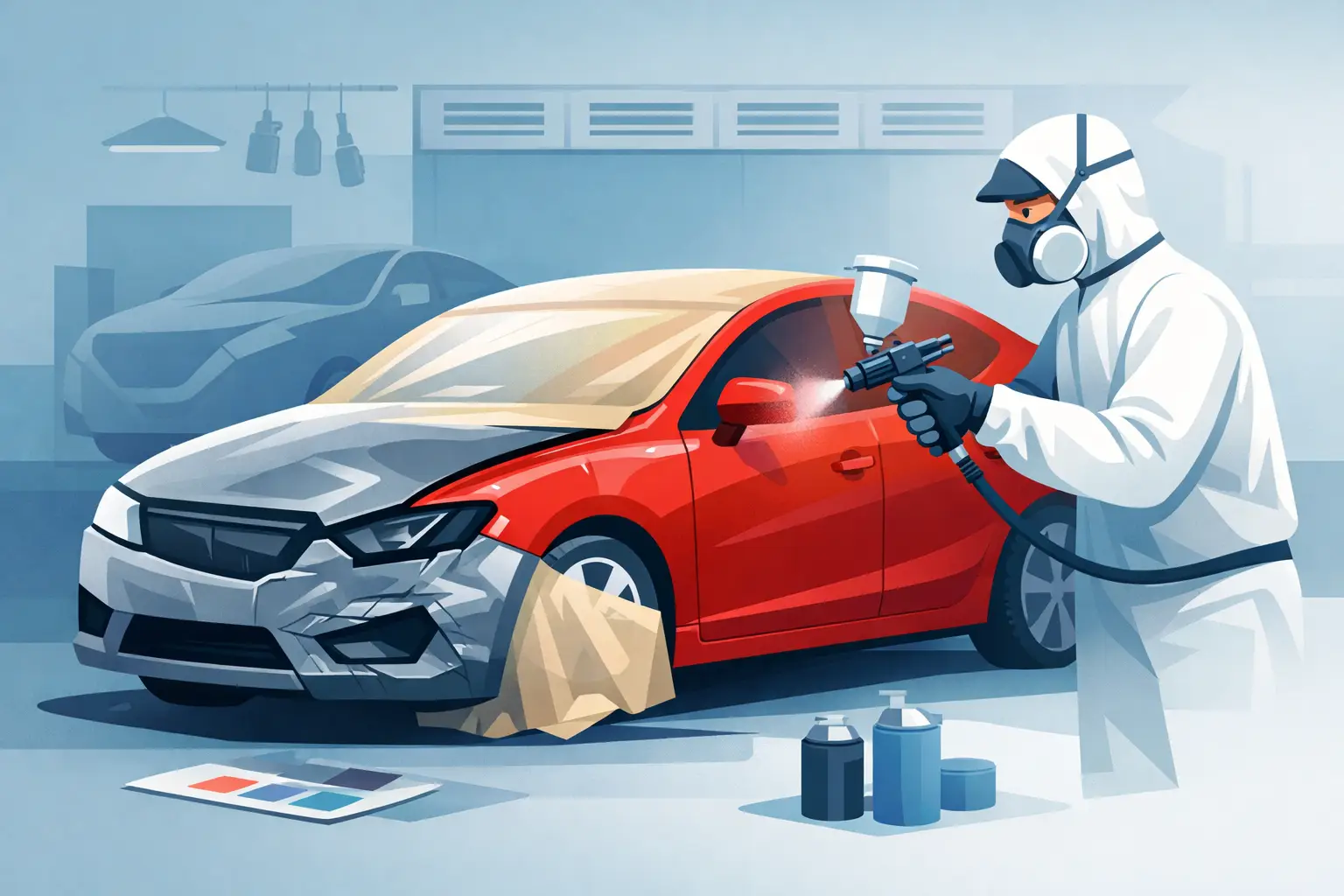
Experienced technicians use computerized color-matching tools, paint formulas, and test spray cards to find the closest match. They also evaluate the color under proper lighting before refinishing the vehicle. In many cases, the best visual result requires blending color into an adjacent panel rather than painting only the damaged spot.
Blending may sound like extra work, but it helps prevent a noticeable line between old and new paint. Whether it is needed depends on the color, panel location, damage size, and condition of the existing finish.
Paint application, clear coat, and curing
Once the panel is prepared and masked correctly, color is applied in controlled coats. A clear coat follows to provide gloss, depth, and protection from UV exposure, weather, and routine washing. The repaired area then needs proper curing before final finishing and reassembly.
A professional paint environment reduces dust and contamination that can settle into fresh paint. After curing, the surface may be polished to remove minor imperfections and bring the finish to a clean, even shine. Trim, lights, badges, and other removed parts are reinstalled, and the vehicle receives a final quality check.
Spot Repair, Panel Repaint, or Blending: Which Is Right?
Not every accident requires a complete repaint. A small bumper scuff may be repaired locally if the damage is limited and the color can be blended effectively. A deep door scratch or broad dent often calls for refinishing the entire panel so the result is consistent from edge to edge.
The right option depends on the damage, paint type, vehicle age, and desired finish quality. A less expensive spot repair can make sense for a minor issue, especially on an older daily driver. However, it may not deliver the same invisible result as a full panel refinish and blend. An honest shop should explain that trade-off before work begins, not after the car is in the booth.
Insurance, Estimates, and Keeping the Process Moving
After an accident, paint repair is usually one part of a larger collision claim. Insurance coverage may include body repair, parts replacement, paint materials, blending, and related work when it is necessary to return the vehicle to its pre-accident condition. Your deductible and policy details still affect what you pay out of pocket.
Start by documenting the damage with photos and reporting the claim if you plan to use insurance. Then get a detailed repair estimate from a collision repair facility. The estimate should identify visible damage and explain that additional repairs may be required if hidden damage is found during disassembly.
You are not required to sacrifice repair quality just because insurance is involved. A capable local shop can work with all insurance companies while keeping you informed about the repair process, parts availability, expected timing, and any supplement needed for newly discovered damage.
If the car is not safe to drive because of loose body panels, broken glass, damaged lights, steering concerns, or more serious collision damage, arrange towing rather than taking chances on the road. Fast action can prevent further damage and get the repair process started sooner.
How Long Does Repainting Take?
Timing depends on more than the paint itself. A minor scratch repair may be completed relatively quickly when the panel needs little preparation and materials are available. Larger repairs take longer because they can involve parts ordering, structural measurement, dent repair, paint matching, curing, reassembly, and final inspection.
Weather is usually less of a factor inside a properly equipped paint facility, but shop workload and insurance approval can affect the schedule. The best answer is a realistic one: a fast turnaround matters, but rushing critical preparation, curing, or safety checks is not worth the risk.
At Kings Auto Body Shop, certified technicians use advanced repair technology to handle both the collision work and the refinishing details, with clear communication from estimate through final inspection.
Protecting the New Finish After Repair
Freshly refinished paint needs reasonable care while it fully settles. Follow the shop’s instructions, especially regarding washing and waxing. In general, avoid aggressive automated washes, harsh chemicals, and abrasive polishing right after pickup. Hand washing gently with clean materials is the safer choice when the finish is ready to be washed.
Keep an eye on the repaired area over the next few weeks. The paint should remain smooth, glossy, and securely bonded, without lifting, unusual dullness, or visible mismatched edges. Quality work should be backed by a guarantee, so contact the repair facility promptly if something does not look right.
Your vehicle does not have to carry the visual reminder of an accident. Get a careful estimate, ask how the color will be matched, and choose a repair team that treats preparation, safety, and finish quality as part of the same job. Restore your vehicle’s condition today with repair work that looks right and is built to last.