Towing Service Reviews: What Drivers Should Check
A dead battery outside the office, a flat tire on the Parkway, or collision damage after a rainy commute can turn a normal day into a stressful one fast. Towing service reviews can help you choose a company before that moment arrives, but only if you know what the comments are actually telling you. The best reviews reveal more than whether a truck showed up. They show how a company communicates, protects vehicles, explains charges, and helps drivers get safely to the next step.
For Westfield, Elizabeth, Newark, and surrounding New Jersey drivers, a tow is often connected to a larger repair decision. A good towing experience should get your vehicle off the road safely and move you toward a trustworthy repair solution without adding confusion, damage, or surprise costs.
Why Towing Service Reviews Matter Before You Need Help
When a vehicle will not start or cannot be driven safely after an accident, most people search from the roadside. That is understandable, but it leaves little time to compare companies carefully. Reviewing local towing providers ahead of time gives you a reliable number to call when you need help quickly.
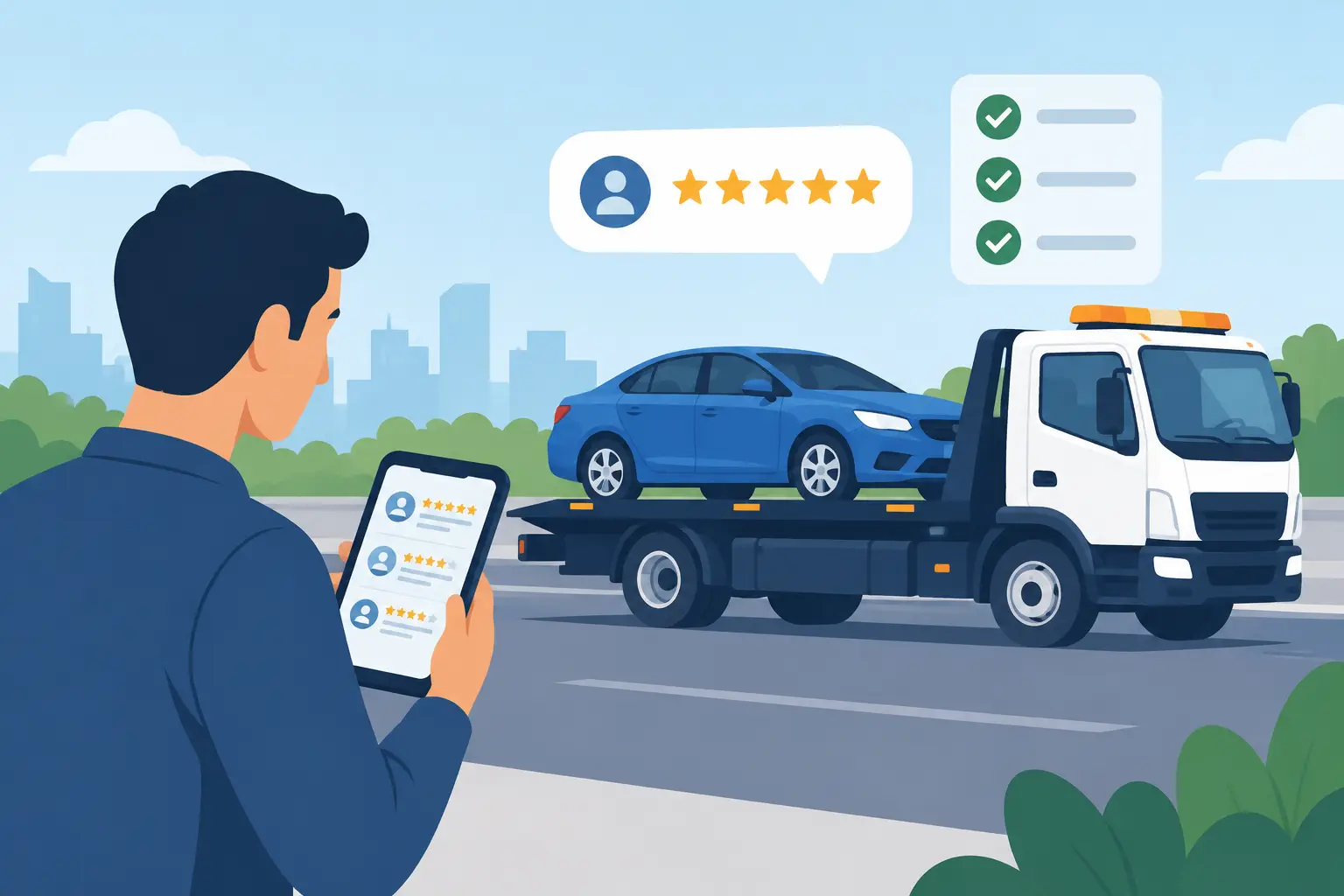
Ratings are useful at a glance, but the written details carry more value. Look for patterns across recent reviews, especially comments about arrival times, clear updates, careful loading, and fair billing. One unhappy customer does not always tell the full story. A repeated complaint about unexplained fees, damaged vehicles, or a dispatcher who never calls back deserves attention.
It also helps to consider the type of tow being discussed. A simple roadside tow for a disabled sedan is different from recovery after a collision, a vehicle with wheel or suspension damage, or a low-clearance vehicle that needs extra care. The most meaningful reviews come from situations similar to yours.
What Good Towing Service Reviews Usually Mention
Strong towing reviews tend to be specific. Instead of simply saying a company was “great,” they explain what happened and why the customer felt cared for. Details make it easier to judge whether the service is dependable when conditions are less than ideal.
Clear arrival expectations
No honest towing company can promise to appear instantly during severe weather, rush hour, or a major local accident. Traffic, weather, truck availability, and the location of your vehicle all affect response time. What matters is whether the company provides a realistic estimate and updates you if conditions change.
Look for reviews that mention accurate arrival windows and responsive dispatchers. A driver who calls with an update is far more helpful than one who leaves you waiting on a dark shoulder without information. Fast service matters, but honest communication matters just as much.
Professional, careful handling
Your vehicle may already have damage, especially after a collision. The tow operator should assess the condition of the car and use equipment suited to the situation. Flatbed towing is often the safer option for accident-damaged vehicles, all-wheel-drive vehicles, luxury cars, or cars with tires, wheels, or suspension concerns.
Reviews that mention careful loading, respectful drivers, and clean equipment are good signs. Pay attention when customers say the operator took photos, explained how the vehicle would be secured, or made sure personal belongings were not left exposed. Those actions reflect a safety-first approach rather than a rush to finish the job.
Straightforward pricing
Towing prices depend on distance, vehicle type, time of day, recovery needs, tolls, storage, and special equipment. That does not make vague billing acceptable. A dependable company should be able to explain its basic tow rate, mileage charges, and any likely additional fees before dispatching a truck whenever circumstances allow.
Read reviews for wording such as “price matched the quote” or “fees were explained upfront.” Be more cautious when multiple customers say the final bill was much higher than expected. After an accident, you have enough to manage without arguing over charges you were never told about.
Respectful service under pressure
A tow operator may be the first person to help after an accident. Professionalism is not a small detail. Drivers should feel safe, heard, and treated with patience, whether they are dealing with a minor fender bender or serious vehicle damage.
Positive reviews often describe operators who answered questions, helped customers understand where their vehicle was going, and stayed calm during a stressful situation. Friendly service should never replace technical skill, but both belong in a quality towing experience.
Read Recent Reviews, Not Just the Star Rating
A five-star average can look reassuring, yet it is only one part of the picture. Check how many reviews support that rating and how recently they were written. A towing company may have built a great reputation years ago but changed ownership, staffing, or operating practices since then.
Recent feedback is especially valuable because towing depends on current availability and local operations. Look at reviews from different times of year. Winter weather, heavy rain, and holiday traffic can expose whether a company communicates well when demand is high.
Also read the company’s responses to criticism. A professional response does not need to agree with every complaint. It should show accountability, a willingness to investigate, and respect for the customer. Defensive or dismissive replies can signal how you may be treated if a problem occurs.
Questions Reviews Cannot Answer for You
Even detailed towing service reviews cannot replace a quick direct conversation. Before you agree to service, ask where the vehicle will be taken, how it will be transported, and what the estimated cost includes. If your car was in a collision, tell the dispatcher about visible damage, deployed airbags, leaking fluids, locked wheels, or a wheel that is bent or missing.
Ask whether the company is licensed and insured and whether it can safely tow your particular vehicle. If you are using roadside assistance through an insurer, manufacturer, or motor club, confirm whether authorization is required before the tow. Those few minutes can prevent coverage issues later.
You should also decide on a repair destination before the truck arrives when possible. Letting a damaged vehicle go to an unfamiliar storage lot can add delays and daily storage charges. A responsive local repair facility can coordinate the vehicle’s arrival, inspect the damage, and help you understand what comes next.
Towing After a Collision Requires Extra Attention
After an accident, do not assume a car is safe to drive simply because it starts. Damage behind a bumper, underneath the vehicle, or around steering and suspension components may not be obvious. A car that pulls to one side, leaks fluid, has a rubbing tire, shows warning lights, or has loose body panels should be evaluated before returning to the road.
Tell the towing provider if the vehicle has collision damage. This allows the operator to bring the right equipment and avoid making the condition worse during loading. It is also wise to take photos of the vehicle before it is moved, gather personal items if it is safe to do so, and keep your tow receipt with your accident-related paperwork.
For drivers who need both towing and collision repair, Kings Auto Body Shop provides responsive towing to its repair facility, helping reduce the handoffs that can slow down an already difficult situation. Once the vehicle arrives, certified technicians can assess visible and hidden damage, provide a free same-day estimate when appropriate, and coordinate with insurance companies.
Build a Shortlist Before the Roadside Emergency
The smartest time to evaluate a towing company is when your car is parked safely at home. Save the contact information for a provider with recent, detailed reviews that demonstrate clear pricing, careful transport, professional communication, and experience with vehicles like yours. Keep your insurance and roadside assistance information accessible as well.
If you need a tow after a crash, prioritize safety over speed alone. Move to a safe location if you can, call emergency services when there are injuries or an unsafe roadway condition, and do not let pressure from a stranger decide where your vehicle goes. The right tow should feel like the first steady step toward getting your vehicle repaired, safe, and back in your driveway.